
Can Fake Fur Go in the Dryer? How to Dry It Safely
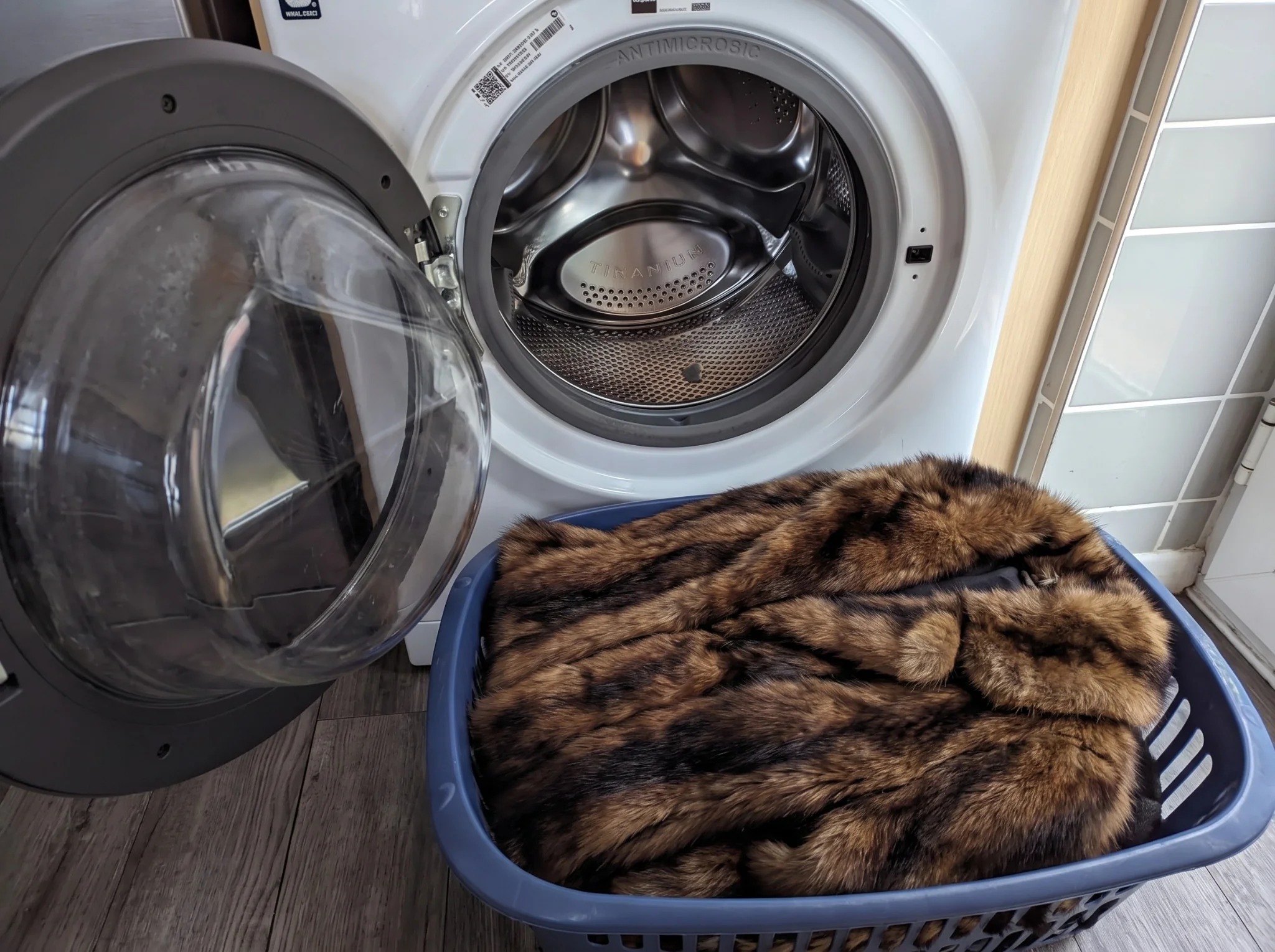
After faux fur is washed, it often does not look as fluffy as usual. The wet pile can stick together, and the lining becomes heavy, which makes many people feel that it needs to be dried quickly. Putting it in the dryer may seem like the fastest option, but for most faux fur coats, high-heat drying can damage the coat and shorten its lifespan.
Simply put: unless the garment's own care label clearly allows it, do not put faux fur in a heated dryer. The heat and continuous tumbling of a dryer can make synthetic pile fibers curl, harden, tangle, or even fuse together. A safer approach is to absorb excess water first, then let the garment air-dry naturally in a cool, well-ventilated place.
Why Can a Dryer Damage Faux Fur?
Faux fur is not one fixed material. Its pile is made from polyester, acrylic, or modified acrylic fibers, with a knitted or woven backing underneath. Once it is made into a coat, it also includes a lining, seams, pockets, fasteners, and other structural elements.
These parts do not all tolerate heat and friction in the same way. While heating, a dryer continually tumbles the garment. Long fibers rub against one another and repeatedly contact the drum. The result may be minor flattening, or more noticeable problems such as pile that loses its direction, feels rough, curls in places, or becomes heat-fused.
Minor flattening can sometimes improve after air-drying and gentle grooming, but fibers that have already hardened or fused together are usually difficult to restore to their original texture. For that reason, whether a garment can be washed and whether it can be tumble-dried must be judged separately. A care label that allows cold-water washing does not necessarily mean it also allows tumble drying
Step One: Check the Care Label First
Before washing or drying faux fur, find the care label inside the garment. Do not assume one coat can be treated the same way as another simply because the other coat can be machine-washed or tumble-dried on low heat.
Common drying instructions include:
- Do not tumble dry: Do not tumble-dry.
- Dry flat: Reshape the garment and dry it flat.
- Line dry / Hang dry: Hang the garment or let it air-dry naturally.
- Tumble dry low: The garment may be tumble-dried on low heat, but only when the label specifically states this instruction.
- No heat / Air only: Use only an unheated-air setting. This is not the same as low-heat drying.
If You Are Only Using the Cool Setting of a Handheld Hair Dryer
First confirm that the care label does not require completely natural air-drying. Keep enough distance and keep the airflow moving. For a coat that is thoroughly wet, room-temperature ventilation should still be the priority; do not rely on a hair dryer to speed up the process.
Step Two: Do Not Wring It Out; Use Towels to Absorb Water
After washing, do not twist faux fur the way you would wring out an ordinary cotton garment. When wet, the garment is heavier than usual. Wringing may pull on the backing, seams, and lining, and can make the pile more tightly tangled.
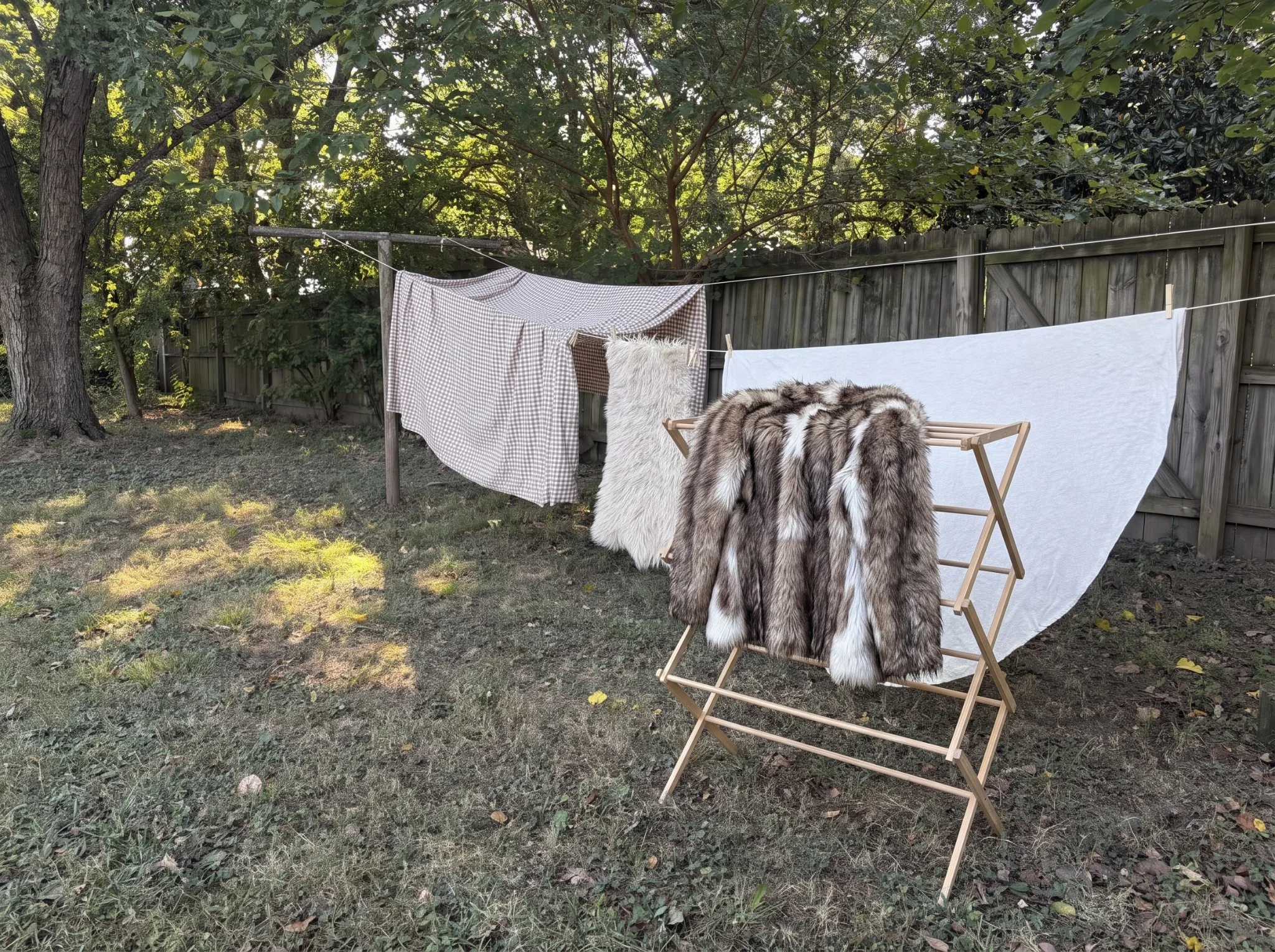
First, support the garment with both hands and let excess water drain away naturally. Then lay it on a clean, dry towel. Cover it with another towel and press gently so the towels absorb moisture. Replace the towels once they become wet; there is no need to rub forcefully. You can also lay a damp faux fur coat flat in the yard to dry in direct sunlight.
Step Three: Reshape It, Then Let It Air-Dry Naturally
While the garment is still damp, reshape the collar, cuffs, hem, and lining so the seams return to their normal positions. You can gently separate clearly stuck-together clumps of pile with your fingers, but do not pull through wet fur with a comb.
Heavy coats or coats with substantial structure are usually better dried flat on a drying rack with a dry towel placed underneath. This helps distribute the weight of the wet garment and reduces the risk of stretching at the shoulders or body. If the care label allows hanging, use a wide, supportive padded hanger rather than a thin wire hanger.
The drying area should have good airflow, but it should be away from radiators, space heaters, fireplaces, heating vents, and strong sunlight. To help the garment dry more evenly, you can replace damp towels, turn the garment over gently, or adjust the lining and pockets so covered areas are exposed to air.
Step Four: Groom It Only After It Is Completely Dry
Do not put the garment away just because the surface pile feels dry. The base of the pile, seams, pockets, and lining may still hold moisture. A dense, long-pile coat may need a full night or even longer to dry, depending on the thickness of the garment, indoor humidity, and airflow.
Once the entire garment is completely dry, you can shake it gently to help the pile loosen naturally. If the care instructions allow it, use your fingers, a wide-tooth comb, or a soft-bristle brush to work through small sections slowly in the direction of the pile. Do not pull if you feel obvious resistance.
Can You Use Low-Heat Drying?
Only consider low-heat tumble drying when the care label clearly says it is allowed. “Low heat” still produces heat, and the actual temperature can vary from one dryer to another. A setting that is gentle for ordinary clothing may still affect long, dense faux fur pile.
Do not automatically apply the care method for a faux fur blanket to a coat. Some blankets are designed and tested to tolerate short periods of low-heat drying; a coat may have a lining, shoulder structure, fasteners, pockets, or bonded materials. The two do not tolerate dryer use in the same way.
Is an Unheated-Air Setting Safe?
Air Fluff or No Heat settings do not actively heat the garment, but the garment still tumbles in the drum. Long pile can still tangle or flatten because of friction.
If the label clearly says “Do not tumble dry,” an unheated-air setting should not be treated as an alternative. Consider using unheated air only when the label allows machine drying or the brand has confirmed that the garment can tolerate tumbling.
What If You Accidentally Put Faux Fur in the Dryer?
Take the garment out first and let it cool naturally on a flat surface. Do not pull or groom it immediately while the fibers are still warm and soft.
Once it has cooled, inspect the pile. If it is only flattened or lightly tangled, start by slowly loosening it with your fingers, then test a wide-tooth comb or soft-bristle brush on one small, inconspicuous area. Work in the direction of the pile, and stop as soon as you feel resistance.
If the pile has become hard, shiny, tightly curled, or clumped into hard sections, the problem may be heat damage rather than ordinary tangling. Do not try to “soften” the fibers again with an iron, steamer, heated comb, or hot hair dryer. Further heating will only make the damage worse.
Minor surface issues can be assessed by a cleaner familiar with synthetic-pile garments. Severely fused fibers may not be fully restorable. In some cases, the damaged area can only be trimmed, covered, or replaced, and it cannot be guaranteed that it will return to its original condition.
Can You Use a Hair Dryer to Speed Up Drying?
Using hot air is not recommended. Although a hair dryer concentrates heat in a smaller area, it can still make synthetic pile fibers curl or deform. Holding it too close can also blow long fibers into a clump.
If the care label does not prohibit it, you can use cool air from a distance to help ventilate a small area, but keep the hair dryer moving and do not aim it at the same spot continuously. For an entire soaked coat, steady room-temperature air and adequate support are still safer than rapidly drying one area at a time.
Should Faux Fur Be Dry-Cleaned?
Do not assume that a coat must be dry-cleaned simply because it is a coat, and do not assume that it can be washed at home simply because it is made from synthetic material. The care label remains the most reliable guide.
If the label calls for professional cleaning, show the complete care instructions to the cleaner and confirm that they have handled synthetic-pile garments before. A standard dry-cleaning process may involve solvents, tumbling, heat, humidification, or steam finishing. The appropriate method should be chosen according to the construction of the whole garment, not just the pile on the surface.
Frequently Asked Questions
Can faux fur go in the dryer?
Heated drying is usually not recommended. Unless the garment's own care label clearly allows it, choose natural air-drying instead.
Will one trip through the dryer definitely ruin faux fur?
Not necessarily. The result depends on the temperature, drying time, pile material, and garment construction. Minor flattening may improve, but hardening, curling, or fusing usually indicates more serious heat damage.
Will faux fur be ruined if it gets wet?
Light rain or normal washing will not necessarily ruin faux fur. What really needs to be avoided is wringing, rough friction, improper washing, and using high heat to force the garment dry faster.
Can you comb it while it is wet?
It is best to use your fingers to arrange obvious clumps first, then groom the pile gently after the garment is completely dry. Pulling a comb through it while wet can put more stress on the pile and backing.
The Safest Method Is Still Natural Air-Drying
If the care label does not clearly say that a dryer may be used, do not test how low your machine's “low” setting really is on a faux fur coat. Absorb excess water with towels, reshape the garment, and give it enough time in a cool, ventilated place. That is usually more reliable than any quick-drying method.
The pile is only one part of a faux fur coat. The backing, lining, seams, and fasteners also determine whether it can keep its original shape over time. Drying it correctly is not a complicated care technique; it simply means avoiding heat, reducing pulling, and waiting until the garment is truly dry before handling the pile.


