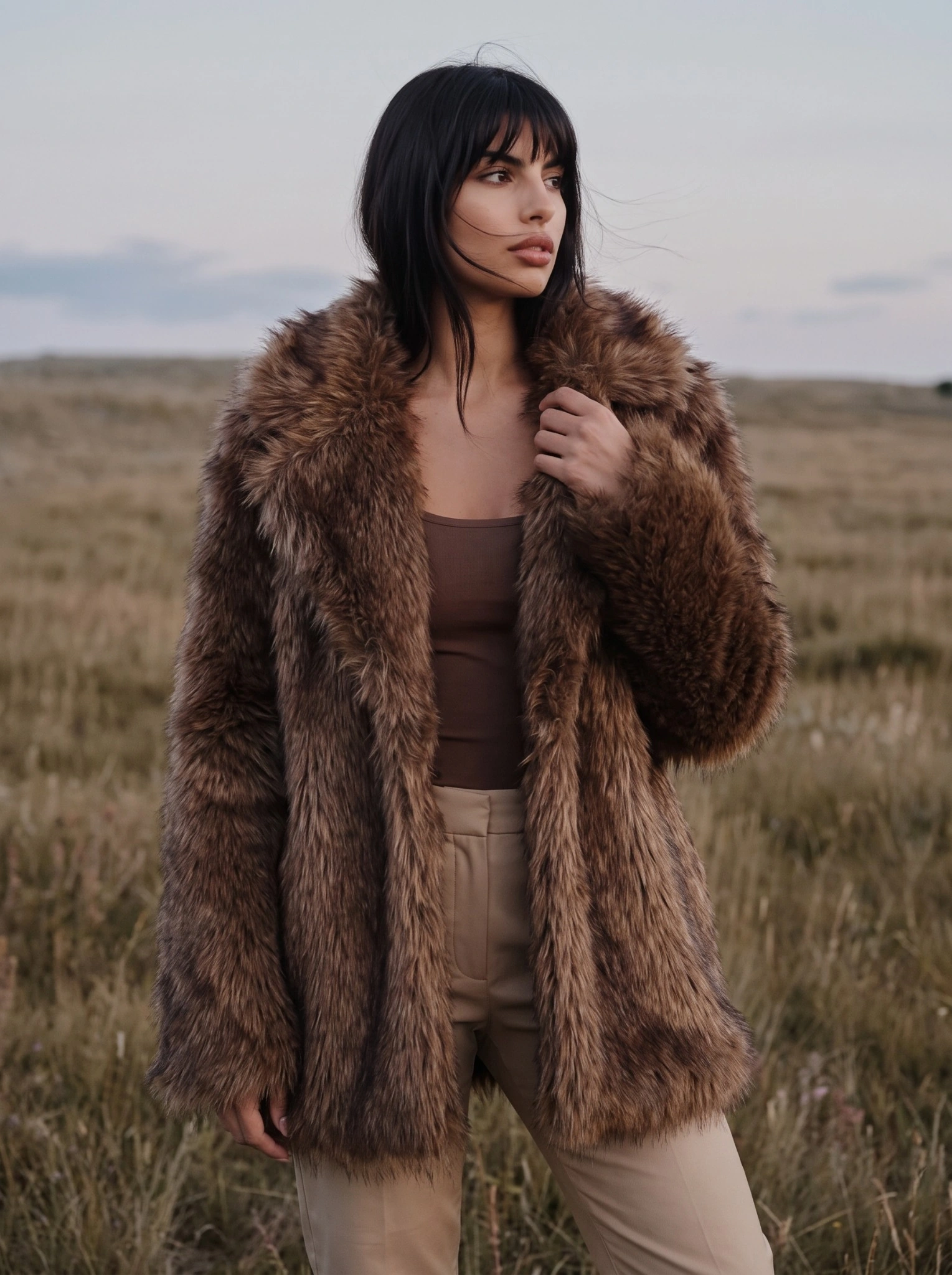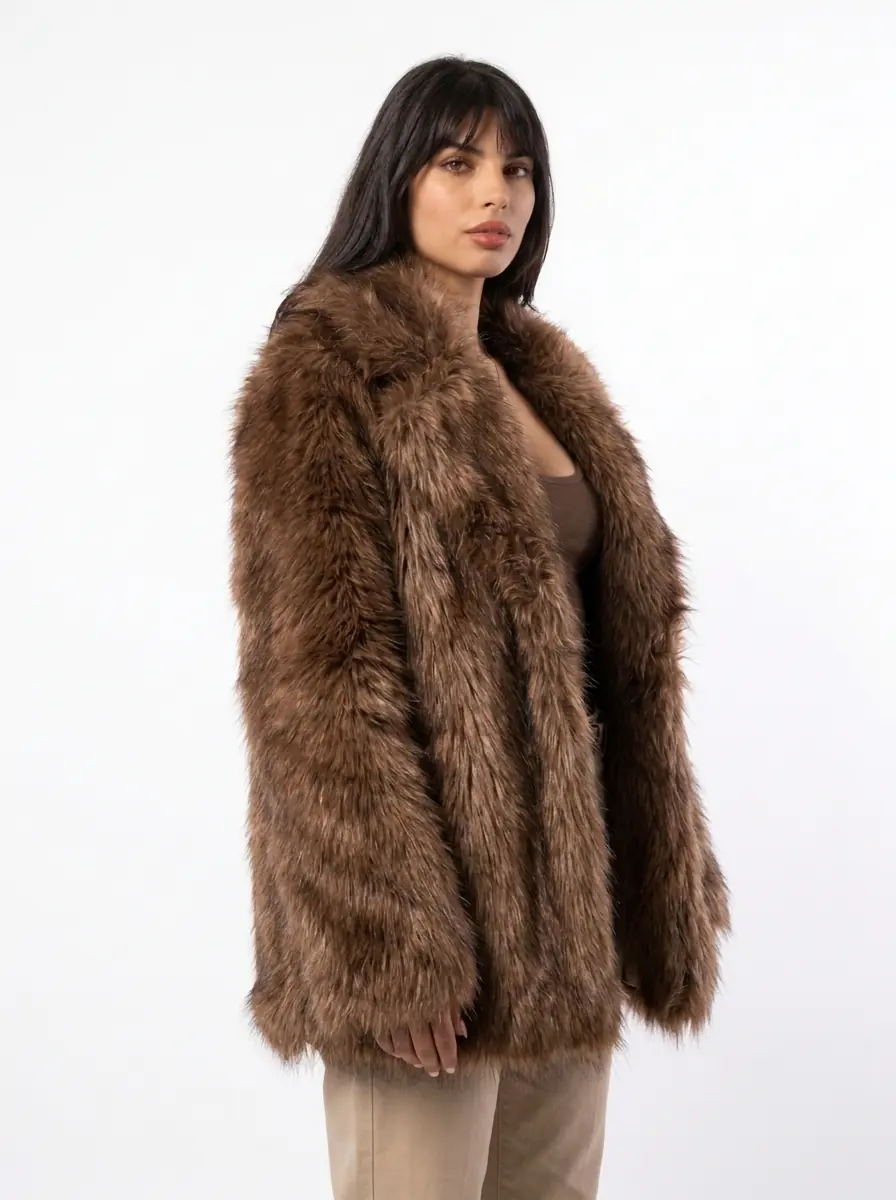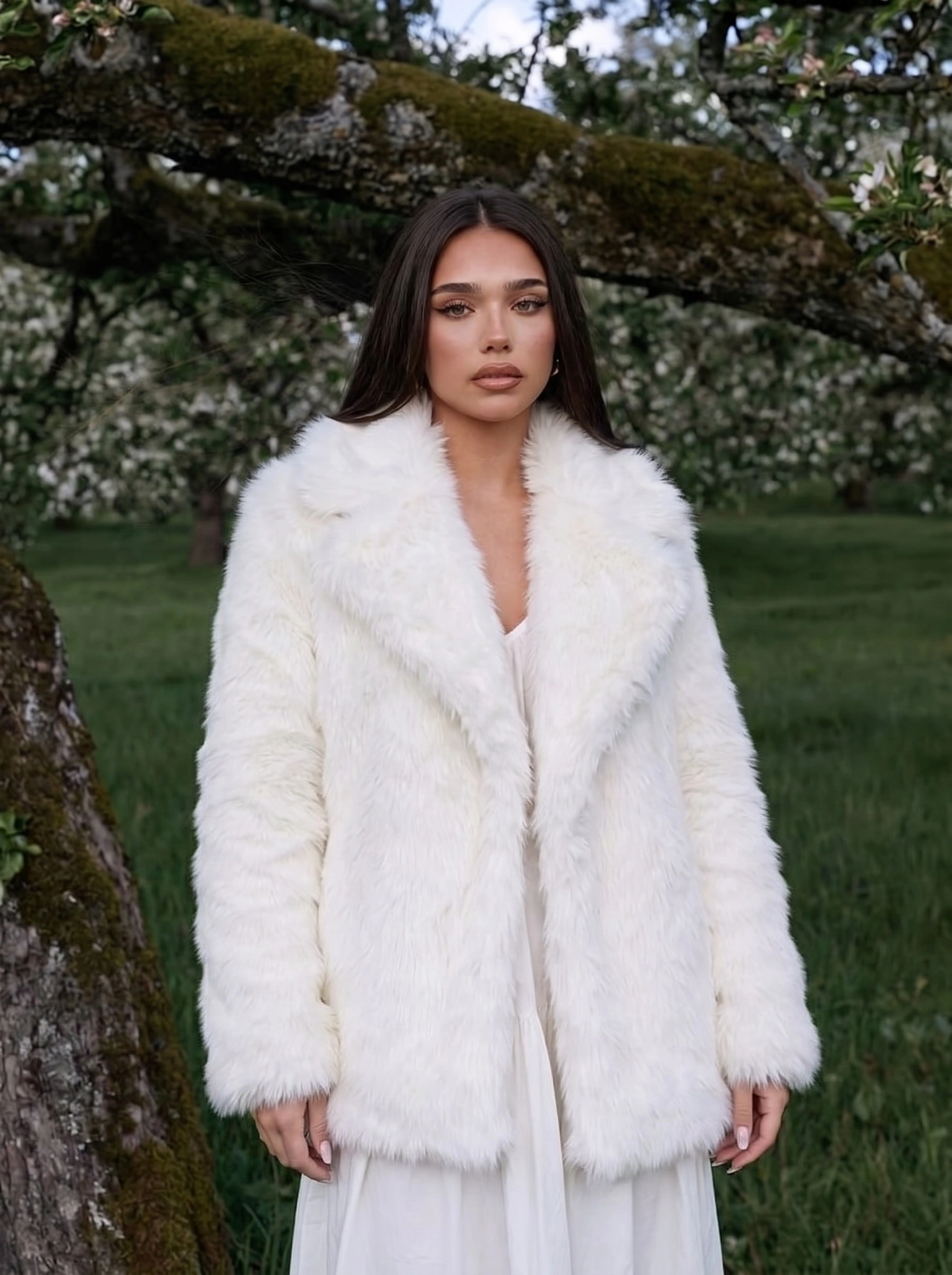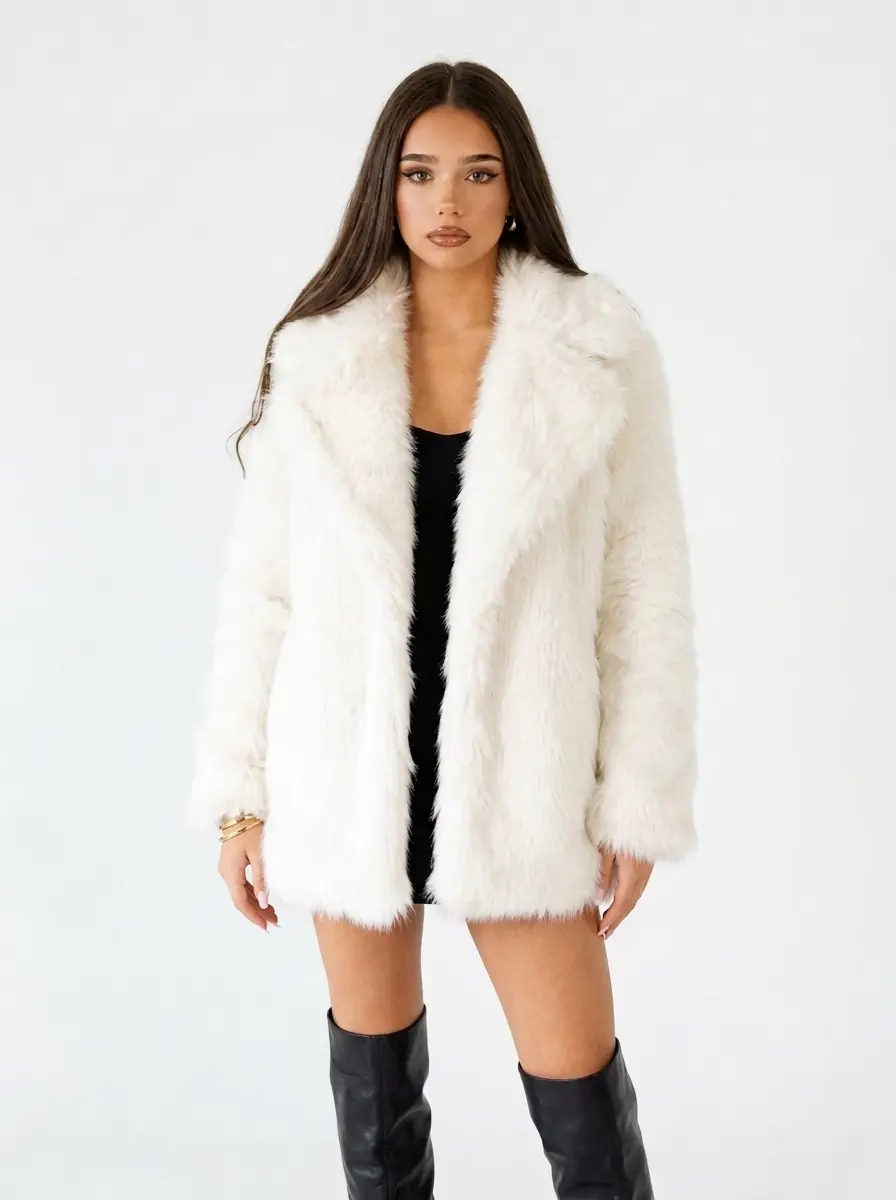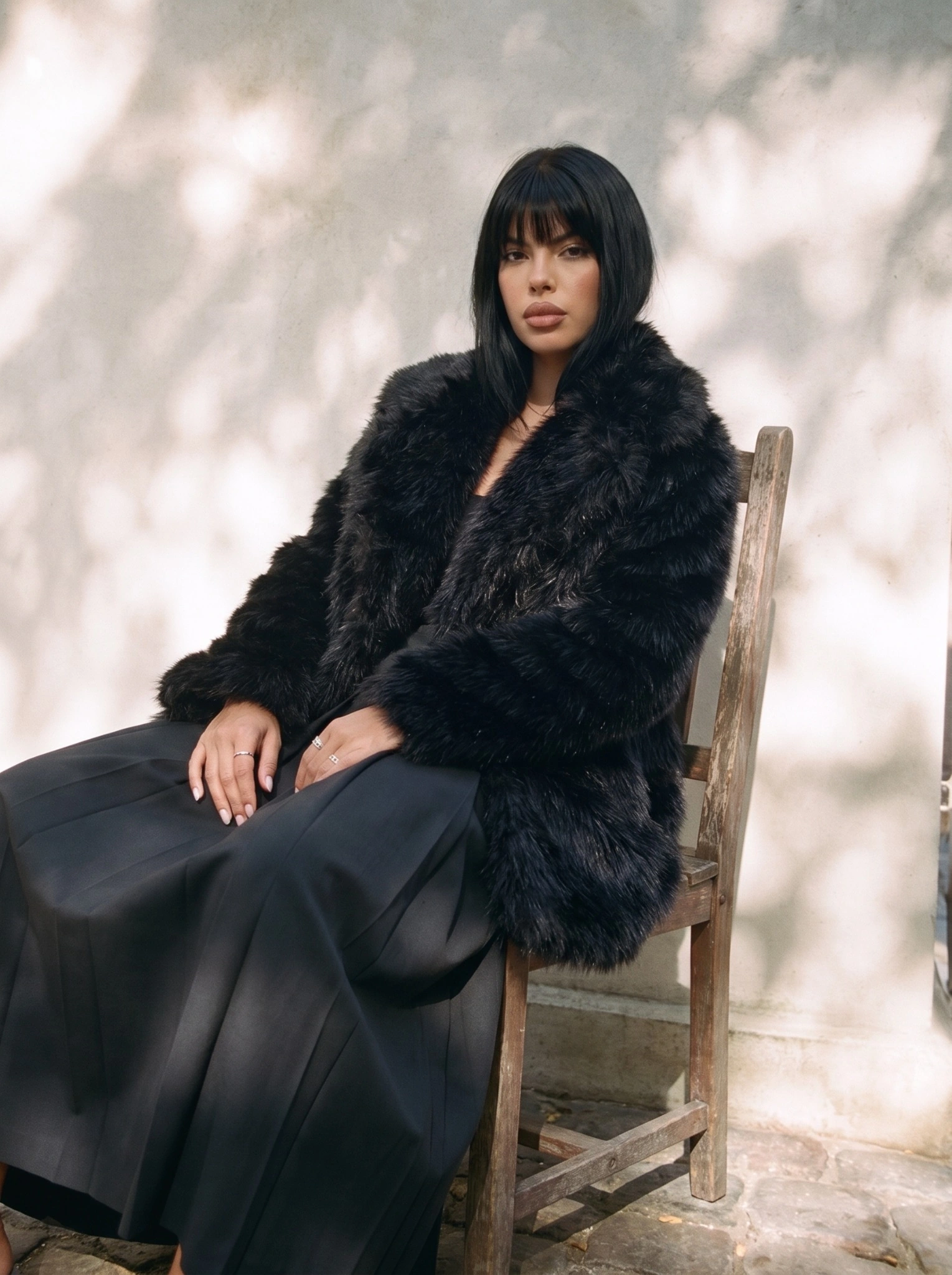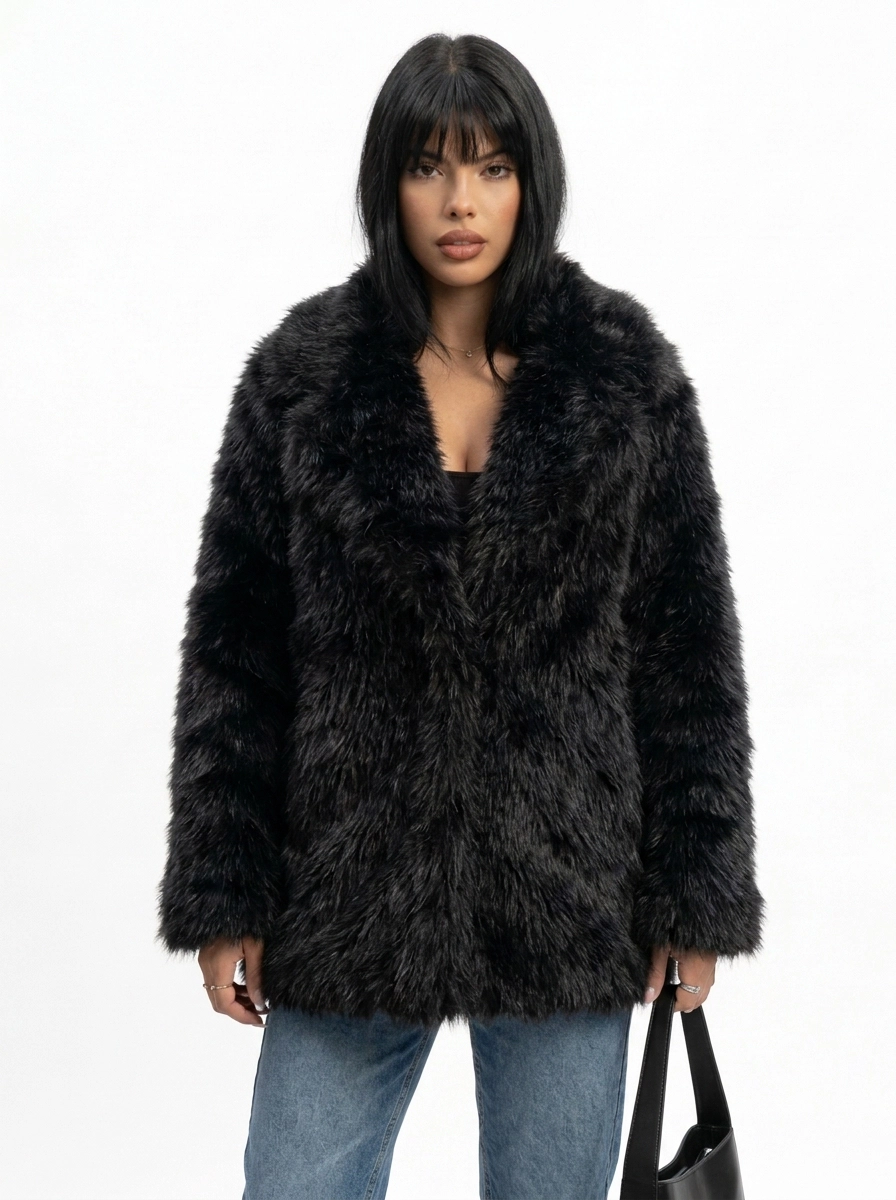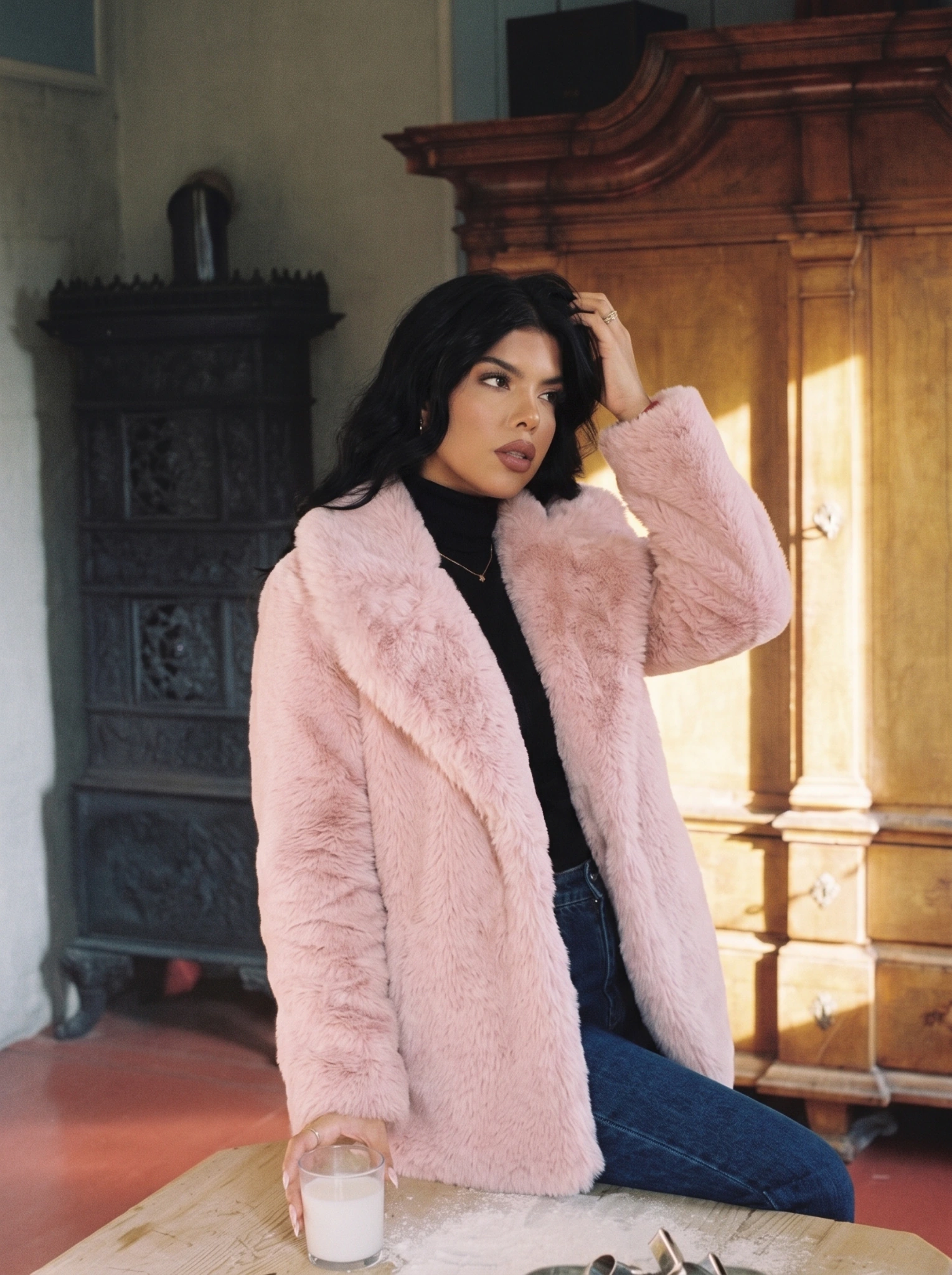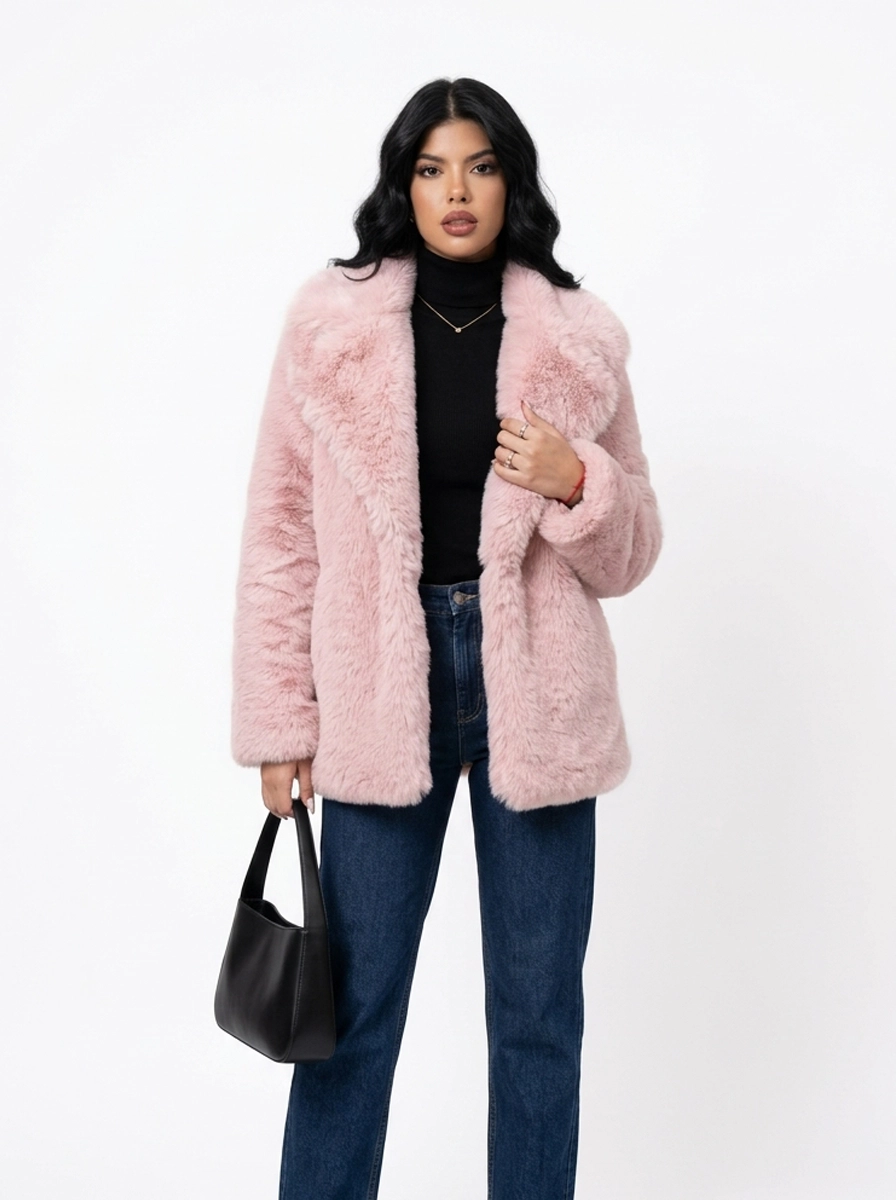
A faux fur coat is outerwear made from a raised pile fabric designed to look and feel like animal fur without using an animal pelt. Most modern faux fur coats use polyester or acrylic fibers attached to a knitted or woven backing, then add a smooth lining for comfortable layering.
In plain English, faux fur coat means a coat with a fur-like textile surface rather than animal skin. One coat may feel light and silky while another feels thick, shaggy, and much warmer because fiber type, pile density, backing, lining, length, and construction all vary.
This guide explains what faux fur is made of, how its layers affect warmth and quality, and what to check before choosing a coat.
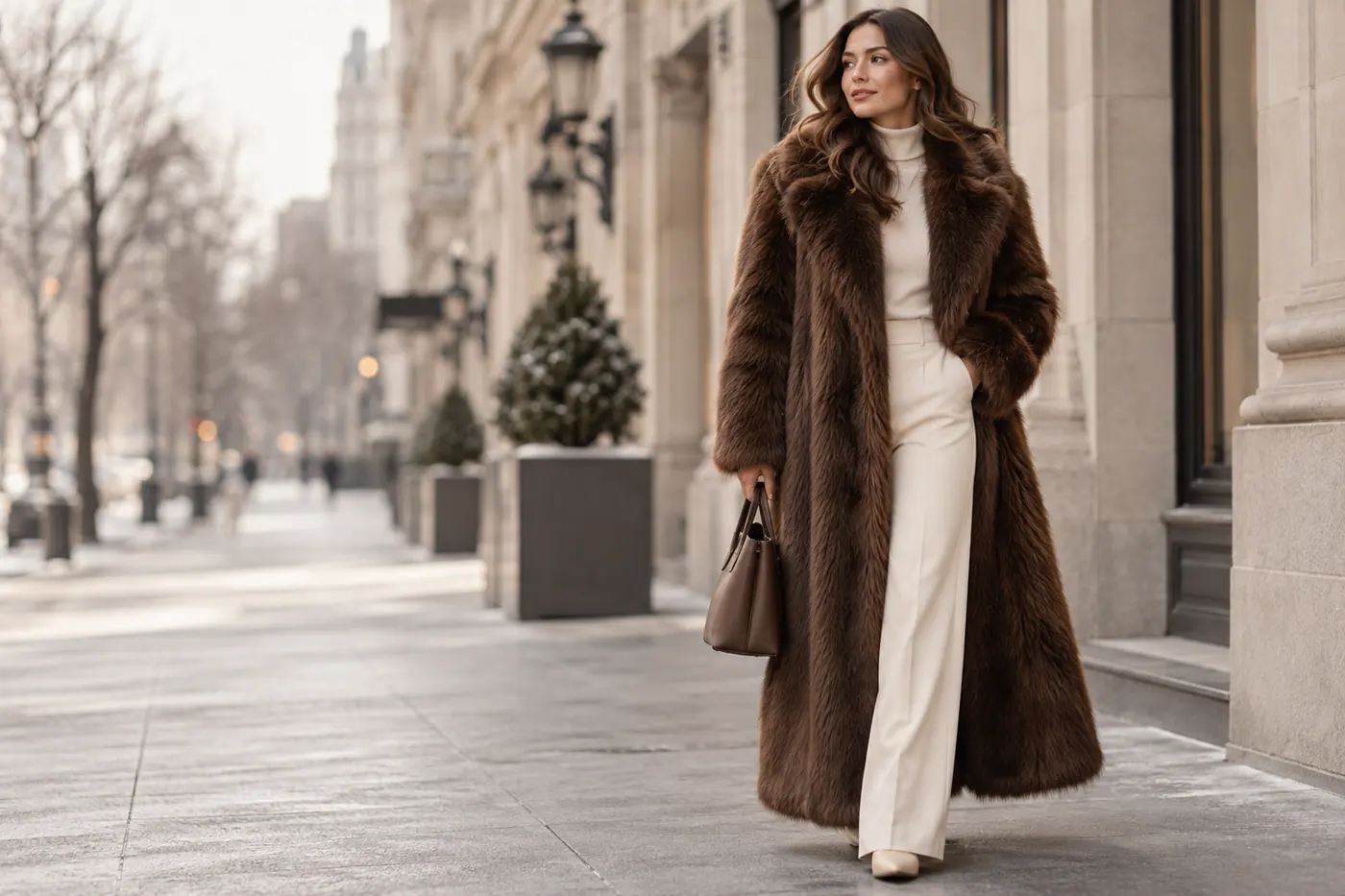
Faux fur outerwear combines soft texture, winter warmth, and a statement-making silhouette.
What Is a Faux Fur Coat?
A faux fur coat is a coat or jacket covered in a soft pile textile that imitates the appearance and movement of real fur. You may also see it described as a fake fur coat, synthetic fur coat, plush coat, or shaggy fur jacket. Unlike real fur clothing, its outer texture is created from textile fibers rather than animal skin.
The word pile refers to the raised fibers you can see and touch. These fibers are secured to a knitted or woven backing. A finished faux fur coat may also include a smooth lining, pockets, closures, a collar, and structural seams that determine how the garment fits and moves.
Faux fur is a textile structure rather than one single material. Conventional versions are usually made from synthetic fibers, although newer alternatives may also incorporate recycled, cellulosic, or partly bio-based fibers.
What Is Faux Fur Made Of?
Most faux fur coats have three main layers:
1. The pile
The pile is the visible and touchable surface that creates the fur-like appearance. Polyester and acrylic are commonly used because they can hold color, texture, curl, and volume.
Short pile creates a smoother, more refined look, while long pile produces a fuller and more dramatic silhouette.
2. The backing
The pile fibers are attached to a knitted or woven textile backing. The flexibility and weight of this backing affect how the coat drapes and moves around the body.
3. The lining
The lining is the smooth inner layer of the coat. It helps the garment slide comfortably over sweaters, dresses, and other winter clothing. A well-made lining can also reduce friction and protect the internal seams.
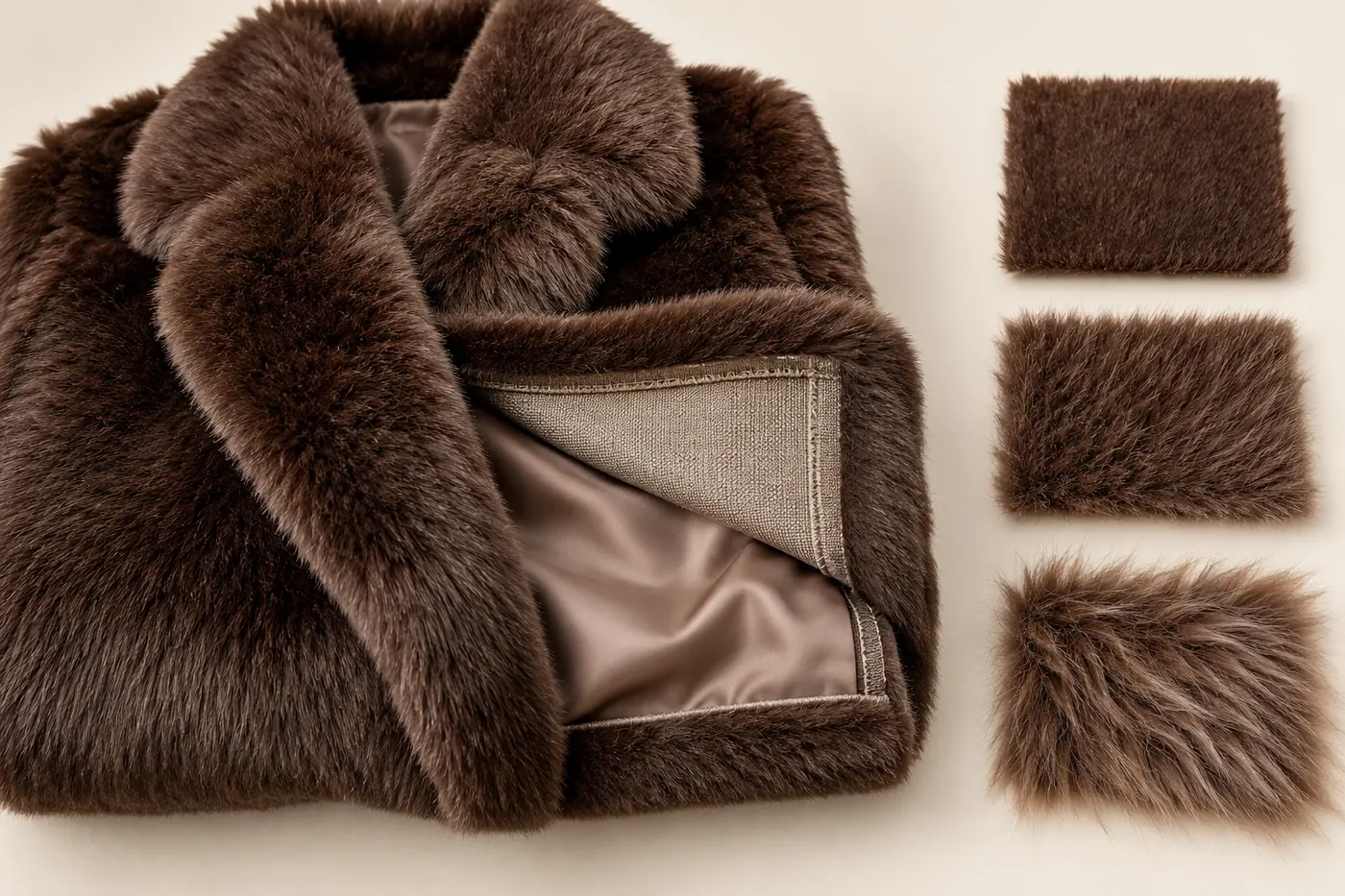
Pile, backing, and lining work together to determine the texture, structure, and comfort of a faux fur coat.
Good to know: Pile length is only part of the quality story. Density, softness, recovery, shedding control, lining quality, and seam finishing matter just as much.
When comparing coats, gently separate the fibers and look at the base. A fuller and more even pile generally creates a richer appearance than sparse fibers that easily expose the backing.
Always check the garment label for its exact fiber composition. Appearance alone cannot reliably tell you what a coat is made of. In the United States, most textile products must disclose fiber content, country of origin, and the responsible manufacturer or marketer.
What is white faux fur made from?
White faux fur is not a separate fiber category. The color describes the finish, not the material. A white faux fur coat may use polyester, acrylic, a blend, or a newer alternative fiber, so the product description and sewn-in label are the only reliable way to confirm its composition.
Are Faux Fur Coats Warm?
Yes, many faux fur coats are warm because their raised fibers trap small pockets of air close to the body. However, faux fur does not have one standardized insulation rating, so warmth varies from one coat to another.
The warmest option is not automatically the coat with the longest fibers. Consider the following features together:
- Pile density: Dense fibers create a more substantial barrier against moving air.
- Coat length: A long faux fur coat covers more of the torso and legs than a cropped jacket.
- Lining: A full lining improves comfort and may help reduce drafts.
- Closures: Hooks, snaps, or buttons help retain warmth better than a coat worn completely open.
- Fit: Enough room for a sweater adds flexibility, but a very open or oversized fit may allow more cold air to enter.
- Weather: Faux fur can feel cozy in dry winter weather, but it should not automatically be treated as technical rainwear or expedition outerwear.
For maximum coverage, explore long faux fur coats. For milder days, evening events, and easy indoor-to-outdoor styling, consider a cropped or short faux fur jacket.
Long, Cropped, Hooded or Vest: Which Style Should You Choose?
The right silhouette depends on where you plan to wear it, how much coverage you want, and how you prefer to layer your clothes.
| Style | Best for | How it changes an outfit |
|---|---|---|
| Long faux fur coat | Cold days, evening outfits, statement dressing | Adds coverage, movement, and maximum visual impact |
| Cropped faux fur jacket | Everyday styling, high-waisted bottoms, indoor events | Defines the waist and balances plush volume |
| Faux fur vest | Transitional weather, layering, unrestricted movement | Adds texture without the coverage of a full coat |
| Hooded faux fur jacket | Winter trips, relaxed streetwear, après-ski outfits | Creates a casual, cozy cold-weather silhouette |
Long faux fur coats
A long faux fur coat creates the most dramatic shape and gives your torso and upper legs additional coverage. It works especially well over streamlined outfits such as fitted knitwear, straight-leg trousers, leggings, or a simple dress.
Choose a longline coat when your priorities are fuller coverage, movement, warmth, and statement-making winter style.
Cropped faux fur jackets
A cropped faux fur jacket balances plush volume by defining the waist and leaving more of the lower body visible. It pairs naturally with high-waisted jeans, tailored pants, skirts, and fitted dresses.
Browse short faux fur coats when you want a statement layer that feels less visually heavy than a full-length coat.
Faux fur vests
A faux fur vest adds texture and core coverage while keeping the arms free. It works well for transitional weather, indoor events, and layered outfits.
Explore Stanetco faux fur vests for a lighter alternative to a complete coat.
Hooded faux fur jackets
A hood frames the face and gives a shaggy coat a more relaxed cold-weather personality. A hooded faux fur jacket can work especially well for winter trips, casual streetwear, and après-ski-inspired outfits.

Different faux fur coat lengths create different proportions, levels of coverage, and styling possibilities.
How Can You Tell Faux Fur From Real Fur?
Start by checking the product label. It should identify the garment's fiber content and is more dependable than trying to judge the coat by softness alone.
High-quality faux fur can look and move convincingly, while both real and faux materials can vary significantly in texture and quality.
If you can safely inspect an exposed edge or seam, faux fur normally has a textile backing beneath the pile. Real fur is attached to animal skin.
Avoid damaging tests: Do not cut, burn, or pull apart a garment to identify it. When shopping online, look for a clear fiber disclosure and contact the retailer if the description is incomplete.
How Do You Choose a Good Faux Fur Coat?
- Read the composition information. Do not rely on product photos alone to identify the material.
- Look for even density. The backing should not be clearly visible during normal movement.
- Check the lining. It should feel smooth, lie flat, and be securely attached at the seams.
- Inspect the closures. Thick pile can hide hooks or snaps, so they should remain secure and easy to use.
- Leave room for layers. Use the size chart and compare the measurements with a coat you already own.
- Match the length to your wardrobe. Cropped silhouettes emphasize the waist, while long coats create more coverage and movement.
- Check the care instructions. Choose a garment with maintenance requirements that fit your routine.
Choose a color that fits your style
Black feels sleek, versatile, and evening-ready. Chocolate brown adds warmth and vintage character. Cream and white create a soft, luminous look. Burgundy, pink, and other expressive colors turn the coat into the center of an outfit.
At Stanetco, faux fur is explored through texture, proportion, color, and movement. Learn more about our design approach on the Stanetco brand page.
How Do You Care for a Faux Fur Coat?
Always follow the care label attached to your specific coat. Fiber blends, linings, dyes, trims, and construction methods differ, so one universal washing method is not safe for every garment.
- Shake off surface dust. Let the coat air out in a cool, dry space after wearing it.
- Treat small marks gently. Blot them with a soft cloth instead of rubbing them deeper into the pile.
- Avoid high heat. Hot dryers, irons, radiators, and hot air may distort or damage synthetic fibers.
- Use a padded hanger. This helps the shoulders retain their shape.
- Give the coat space. Long-term compression can flatten the pile.
- Brush carefully. Once completely dry, a wide-tooth comb may help separate fibers if the care label permits it.
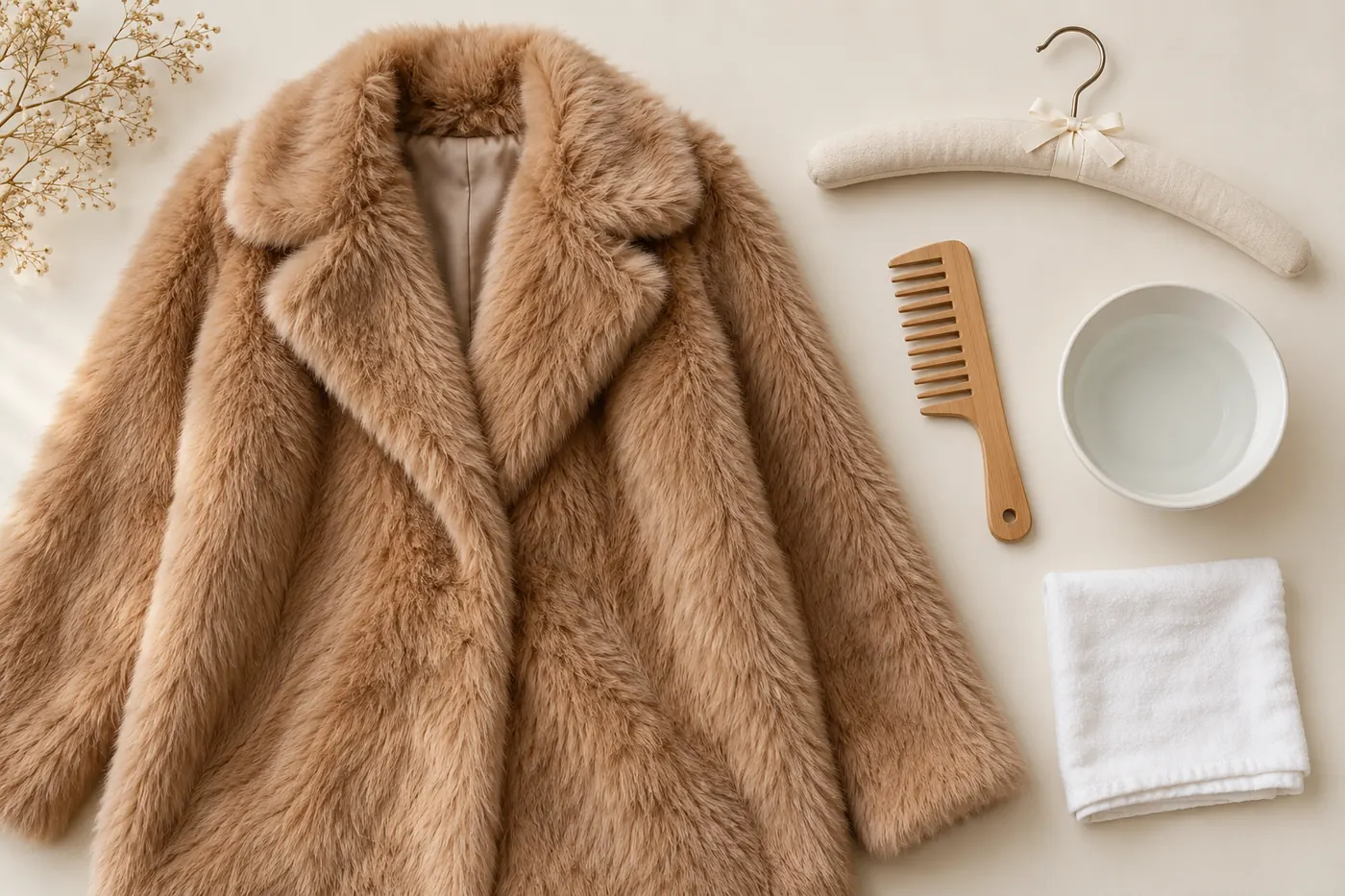
Gentle handling, low heat exposure, and proper storage can help preserve the coat's shape and texture.
If the label recommends professional cleaning, follow that direction and tell the cleaner that the garment is faux fur. Avoid copying an online cleaning hack without checking the coat's construction first.
Storage and cleaning habits also affect longevity. For a fuller explanation, read how long a faux fur coat can last.
Are Faux Fur Coats Ethical?
Faux fur avoids the use of animal pelts, which is the main reason many shoppers choose it. Environmental impact is a separate question.
Conventional acrylic and polyester fibers are commonly derived from fossil resources, and synthetic textiles may release microfibers during their life cycle. Recycled, cellulosic, and partly bio-based alternatives may improve particular impacts, but no single material claim tells the complete story.
A practical approach is to check the composition, choose a coat you genuinely expect to wear, care for it properly, and keep it in use for as long as possible.
If material safety is part of your comparison, see our evidence-based guide to whether faux fur is toxic to humans.
Frequently Asked Questions
What does faux fur coat mean?
A faux fur coat is outerwear with a raised textile pile designed to resemble animal fur without using an animal pelt. The pile is attached to a fabric backing and the finished coat is usually lined.
What is a white faux fur coat made from?
White describes the coat's color, not its fiber content. It may be made from polyester, acrylic, a blend, or an alternative fiber. Check the product description and garment label for the exact composition.
Are faux fur coats warm?
Many faux fur coats are warm because dense pile traps air. The actual warmth depends on pile density, lining, length, closures, fit, wind, and weather conditions.
Is faux fur the same as sherpa?
Not exactly. Faux fur usually has a more hair-like pile, while sherpa typically has a shorter, curled, fleece-like surface inspired by sheep's wool. Retail terminology varies, so check the composition label.
Can faux fur get wet?
A small amount of light moisture does not necessarily ruin a faux fur coat, but it should not automatically be considered waterproof. Blot the moisture and allow the coat to dry naturally according to its care label.
Can you machine-wash a faux fur coat?
Only machine-wash a faux fur coat when its care label specifically permits it. Some garments require spot cleaning, gentle hand washing, or professional cleaning.
Does faux fur shed?
A small amount of loose fiber may occur, particularly when a garment is new. Persistent heavy shedding may indicate poor pile anchoring, damaged fabric, or overly aggressive care.
How long does a faux fur coat last?
Its lifespan depends on construction, frequency of wear, storage, and care. A well-made coat stored properly and protected from damaging heat can remain in a winter wardrobe for many seasons. See our faux fur coat lifespan guide for the factors that matter most.
Final Takeaway
A faux fur coat combines a soft, fur-like pile textile with the structure of modern outerwear. The best choice is not simply the fluffiest coat.
Consider the material disclosure, pile density, lining, fit, length, closures, care requirements, and the outfits you actually wear. The right piece should feel expressive, comfortable, and easy to return to throughout the season.
Find Your Faux Fur Silhouette
Discover long coats, cropped jackets, plush vests, and hooded faux fur styles designed around texture, color, and winter presence.
Explore Faux Fur Coats