
Published September 6, 2026 · Reviewed September 27, 2026 using FTC textile-labeling guidance, CPSC flammability rules, EPA information on synthetic microfibers, and a NIOSH review of textile-related skin complaints.
Faux fur is not automatically toxic to humans. Most finished faux fur garments use common textile fibers such as polyester, acrylic or modacrylic.
The practical issues to check are skin irritation, persistent odor, heavy shedding, unclear material labels and exposure to flame or high heat. A fiber name alone cannot confirm the safety or chemical content of a specific coat.
This guide explains what faux fur is made from, why a particular garment may cause irritation, what a new-garment smell can mean, and which warning signs deserve attention.

Is Faux Fur Toxic? The Short Answer
A faux fur coat cannot be judged by the word “synthetic” alone. Polyester, acrylic and modacrylic are common textile fibers, while dyes, finishes, lining materials and individual sensitivity can differ between garments.
For shoppers, the useful checks are clear material and care labels, persistent odor, abnormal shedding, physical reactions and distance from flame or high heat.
| Question | What it may mean | What to do |
|---|---|---|
| The coat feels itchy | Friction, dye, finish, detergent, fragrance or lining sensitivity | Stop wearing it if irritation persists and check the label |
| It has a strong smell | Packaging, storage, dye or finishing odor | Ventilate it; stop use if the odor persists or causes symptoms |
| It sheds heavily | Construction quality, abrasion or damaged pile | Avoid aggressive brushing and contact the retailer |
| It is near a heater or flame | Possible melting, scorching or ignition | Move the garment away from the heat source |
What Is Faux Fur Made From?
The visible pile is commonly made from polyester, acrylic, modacrylic or a blend. It is attached to a knitted or woven backing, while the finished garment may also contain a separate lining, interfacing, buttons, hooks and decorative trims.
The phrase “faux fur” describes the look and construction of the fabric, not its exact composition. That is why the fiber-content label is more informative than appearance alone. The U.S. Federal Trade Commission’s textile labeling guidance explains that most covered textile products must identify their fiber content, country of origin and the responsible manufacturer or marketer.
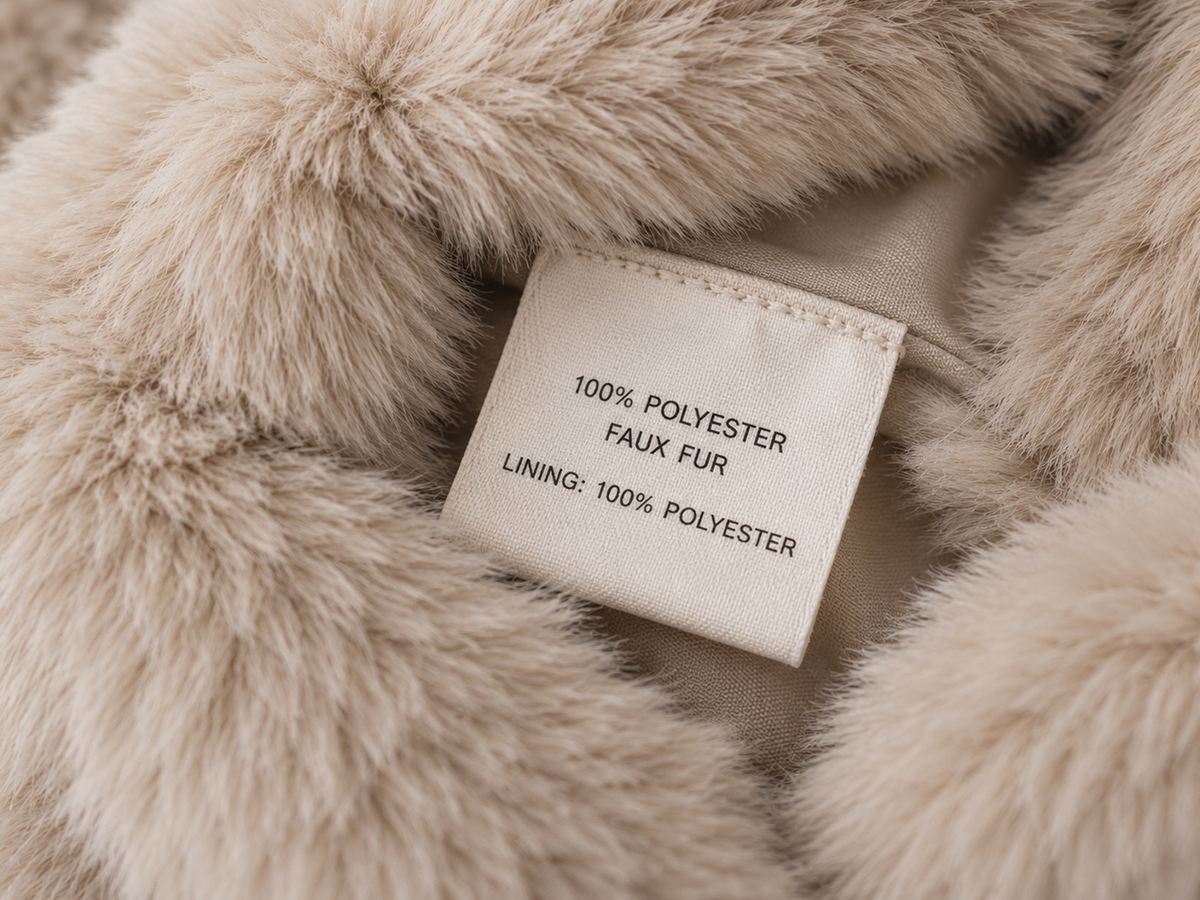
When comparing garments, look for a readable label, clear care instructions and a product description that identifies the materials. Certifications such as OEKO-TEX or product-compliance claims should only influence your decision when the seller provides verifiable documentation for that specific product.
If you are new to the material, read what a faux fur coat is and how it is constructed.
Can Faux Fur Cause Skin Irritation?
Some people can experience itching, redness or discomfort while wearing a garment, but the visible fiber is not always the only possible cause. Textile dyes, finishing agents, detergent residue, fragrance, lining materials, trapped moisture and friction may all contribute.
A NIOSH evaluation of airline uniforms—not faux fur specifically—reviewed evidence that some textile dyes and finishes may have irritating or sensitizing properties. The report also noted that friction, warmth and moisture can make clothing dermatitis more noticeable. This evidence explains a possible textile-related reaction, but it does not prove that a particular faux fur coat causes an allergy.
What to Do if a Coat Feels Itchy
- Wear a soft base layer between the pile and bare skin.
- Check the shell, lining and care labels.
- Avoid applying perfume or household deodorizer directly to the fabric.
- Only wash the garment when its care label permits that method.
- Stop wearing it if a reaction continues.
Why Does New Faux Fur Sometimes Smell?
Dense pile can hold odors from packaging, storage, transportation, dyes and finishing processes. A smell by itself does not identify the chemical responsible or establish whether an item is unsafe.
Start by placing the garment in a dry, well-ventilated area away from direct sunlight and heat. Do not try to hide a strong odor with perfume, because added fragrance can make the source harder to assess and may create another irritant.
If the odor remains unusually strong after ventilation, returns repeatedly or causes headaches, coughing, eye irritation or nausea, stop using the item and contact the retailer. Do not assume that discomfort is simply part of owning a new coat.
Does Faux Fur Release Microplastics?
Conventional faux fur commonly uses synthetic pile fibers. The U.S. Environmental Protection Agency identifies microfibers shed from synthetic clothing as a form of secondary microplastic.
This supports a general environmental concern about synthetic garments, although it does not measure shedding from a specific coat or establish that ordinary skin contact is poisonous.
To reduce unnecessary shedding, avoid over-washing, harsh scrubbing and aggressive brushing. Follow the product label and keep the garment in use for as long as it remains in good condition.
Heat and Flame Safety
Synthetic pile can deform, melt or scorch when exposed to excessive heat. The U.S. Consumer Product Safety Commission maintains flammability requirements for clothing textiles under the Flammable Fabrics Act, but passing a textile standard does not make a coat safe to place beside an open flame.

Keep the garment away from fireplaces, candles, space heaters, hot stovetops, irons and high-temperature hair dryers. A thick or fluffy texture should never be interpreted as heat resistance.
A Five-Point Check Before You Buy or Wear It
- Read the fiber label. Check the pile, backing and lining when that information is provided.
- Look for usable care instructions. Avoid guessing whether the piece can be washed or exposed to dryer heat.
- Handle it gently. A few loose fibers can occur, but heavy shedding during light handling deserves attention.
- Assess persistent odor. Ventilate first; stop use when the smell remains intense or produces symptoms.
- Consider where it will be worn. Keep long or voluminous pile away from flame and high heat.

For a closer look at pile density, lining, labels and construction, read the faux fur coat buying guide.
How to Care for Faux Fur Safely
Care instructions differ because pile fiber, backing, lining and garment construction vary. Some pieces permit gentle washing, while others call for spot cleaning or professional care. The product label should take priority over generic internet advice. In the United States, the FTC Care Labeling Rule requires manufacturers and importers of covered apparel to provide regular care instructions.
- Read the care label before washing, steaming or brushing.
- Avoid unnecessary washing and harsh agitation.
- Air-dry when instructed and avoid high dryer heat.
- Store the coat with enough room to prevent crushing the pile.
- Use only a garment-safe brush when the manufacturer allows brushing.
Frequently Asked Questions
Is Polyester Faux Fur Toxic?
Polyester fiber content alone does not establish that a finished coat is toxic during normal wear. Evaluate the complete garment, including its dyes, finishes, lining, odor, shedding and care information.
Is Acrylic Faux Fur Safe to Wear?
Acrylic is commonly used in synthetic textiles. Follow the garment label, keep it away from high heat and stop wearing a particular item if it repeatedly causes irritation or discomfort.
Can Faux Fur Cause an Allergic Reaction?
A person may react to something associated with a garment, including dyes, finishes, fragrance, detergent residue, lining material, trapped allergens or friction. The term “faux fur allergy” does not identify the exact cause. Stop wearing the garment if symptoms appear, and seek medical advice for significant or persistent skin or breathing symptoms.
Can Faux Fur Make You Sick?
The material name alone cannot predict whether a particular garment will cause symptoms. Persistent odor, eye irritation, coughing, breathing discomfort or a noticeable skin reaction are reasons to stop using the item and contact the retailer. Significant or continuing symptoms should be assessed by a medical professional.
Should I Wash a New Coat Before Wearing It?
Only wash it if the care label permits washing. Ventilation may be a better first step for packaging odor because some garments require spot cleaning or professional care.
Why Is My Faux Fur Shedding?
Shedding may result from loose surface fibers, abrasion, construction quality, age or incorrect care. Heavy or persistent shedding should be reported to the retailer.
What Should You Check Around Children and Pets?
Check for loose buttons, hooks, trims and excessive shedding. Keep the garment away from open flame and heaters, and prevent children or pets from chewing or swallowing fibers or removable components.
What to Remember
Faux fur is not automatically toxic because it uses synthetic fibers. Examine the specific product: read its fiber and care labels, ventilate persistent packaging odors, avoid high heat, minimize unnecessary abrasion and stop wearing it if it causes a physical reaction.
Faux fur avoids animal pelts, while conventional synthetic versions still raise questions about microfiber shedding and end-of-life disposal. These considerations are separate from whether a finished garment is toxic during normal wear.
To learn about the brand and its approach to the category, visit About Stanetco.
Explore Stanetco Faux Fur
After checking a garment’s material label and care instructions, choose the silhouette that fits how you plan to wear it.
Long Faux Fur Coats Short Faux Fur Coats Faux Fur Vests Hooded Faux Fur Jackets


