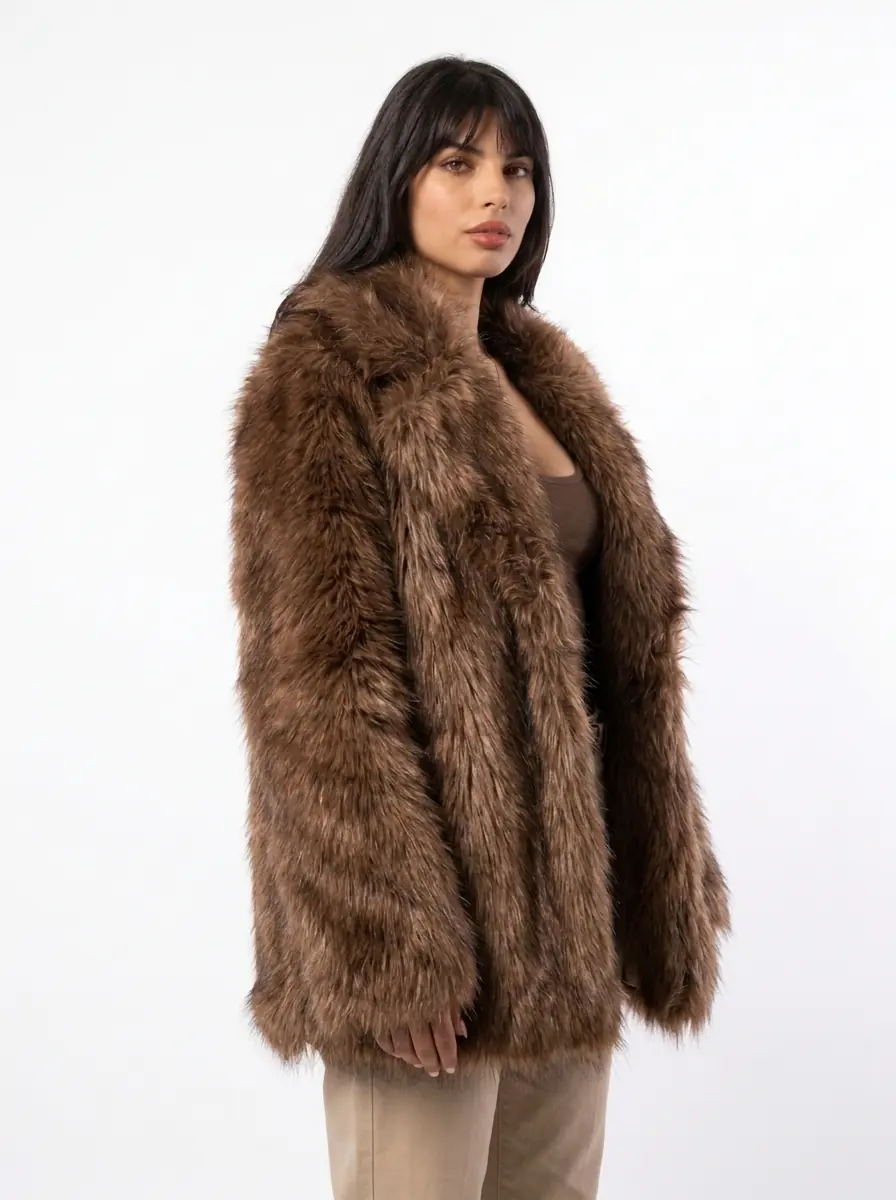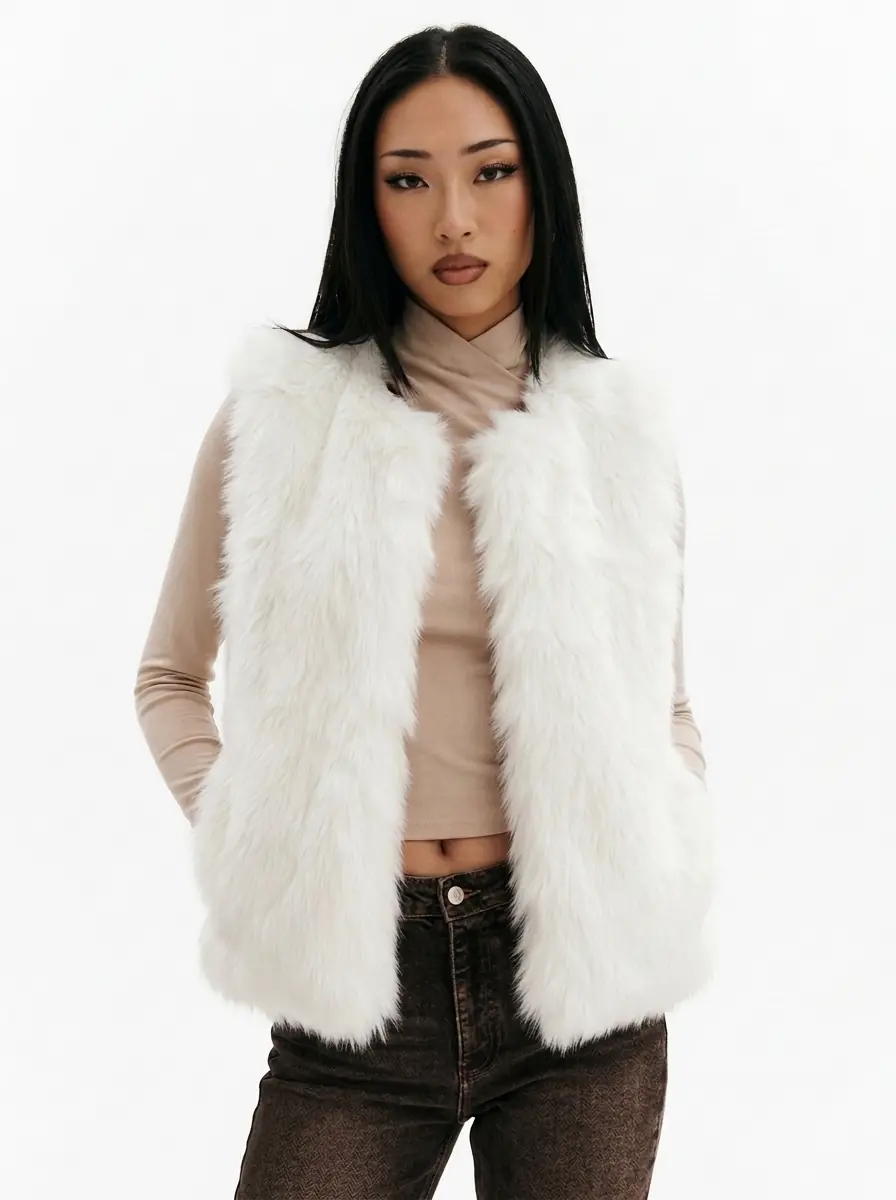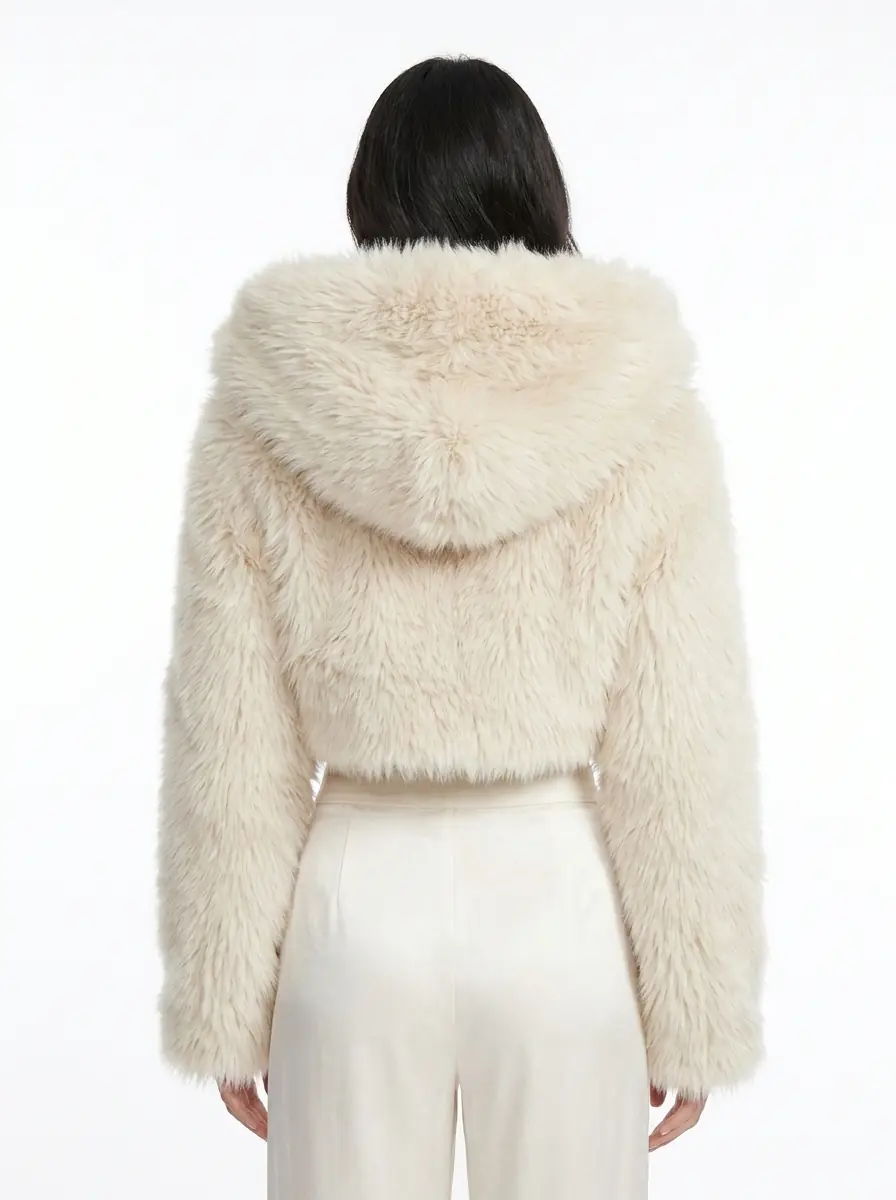

Faux fur is easy to fall for in a photograph. Studio light catches the tips of the fibers, the color looks rich, and the coat seems to have exactly the right amount of volume. The photograph captures the mood. Questions about the lining and sleeve room remain until you look closer.
Those quieter details decide how often the coat leaves the closet. While preparing this guide, we checked the Federal Trade Commission's care-label guidance and focused on details a shopper can verify from a product page, a size chart and the garment label. You do not need specialist vocabulary. You need a clear idea of where the coat will go and enough information to judge whether it can come with you.
Picture one ordinary winter day
Start with the coat you would wear on a Tuesday. Imagine sitting in the car with your shoulder bag beside you. Later, you walk through a heated store and have to carry the coat for a while. A long faux fur coat offers more coverage, though the hem and overall weight matter when you sit. A short jacket is easier around a desk or steering wheel. A vest leaves your arms free and works well in milder weather.
The same coat can feel very different in Chicago wind and during a mild California evening. Faux fur often feels warm because the raised pile holds air, but there is no single warmth rating that covers every garment. The density of the pile and the lining make a difference. So do the closures and the clothes underneath.
For long periods outdoors, heavy rain or severe cold, read the specifications carefully. Fashion faux fur should not be treated as waterproof or technical insulated outerwear unless the maker gives those details.
If length is already the main decision, compare our long faux fur coats with the short faux fur jackets. A faux fur vest makes more sense when you want the texture without full sleeve coverage.

What the close-up photos should show
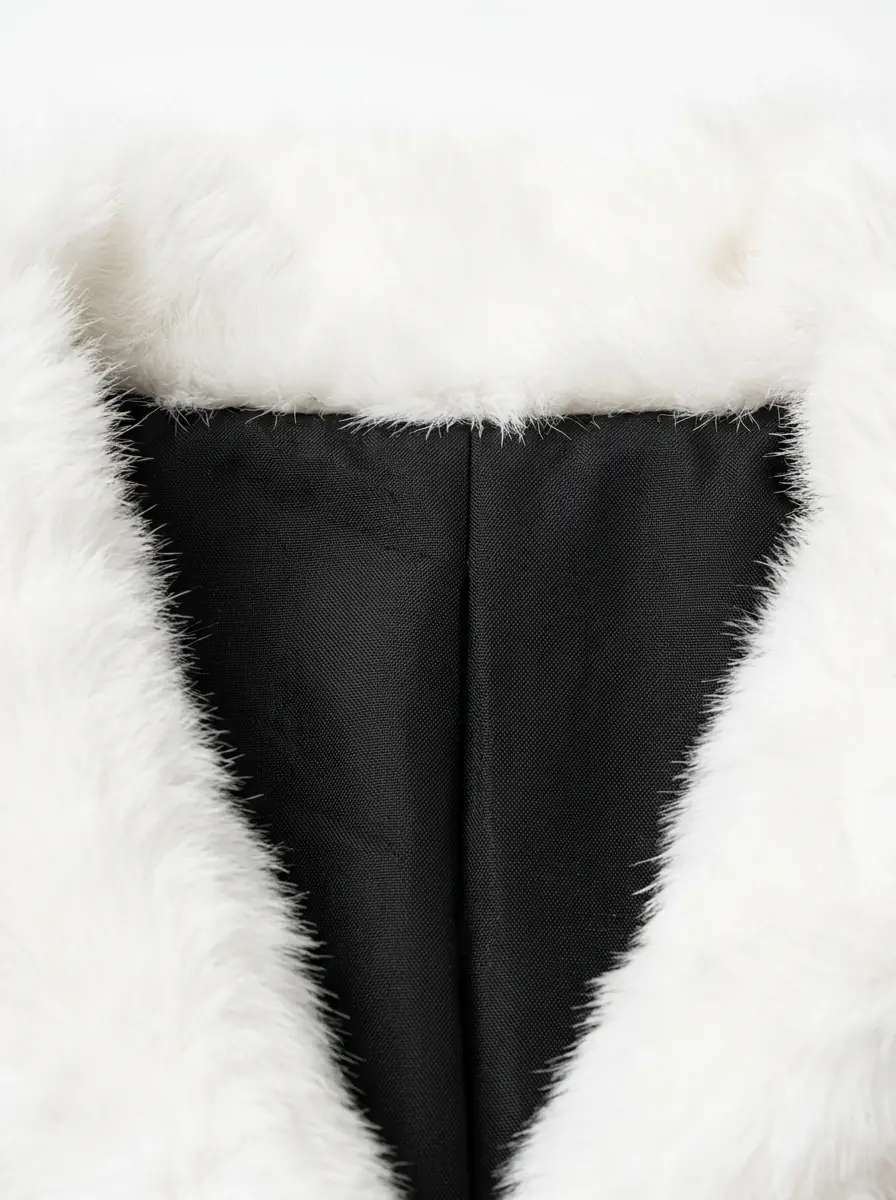
The fuzzy surface is called the pile. Words such as plush, shaggy and silky describe a look, yet none of them is a standard quality grade. The useful evidence is in the close-ups.
Look first at the collar, cuffs and side seams. The fibers change direction in these areas, which can expose an uneven cut or a seam that has trapped too much pile. Then look at a section where the coat bends. If the textile backing appears through the fur during ordinary movement, the finished coat may look thinner than the main photograph suggests.
Customer photographs help here. They show the coat under household light and from angles a studio may skip. A few loose fibers can appear on a new faux fur garment. Repeated reports of heavy shedding carry more weight than one isolated comment.
The inside tells you how the coat may feel
A smooth lining lets a coat slide over knitwear. In a clear interior photograph, it should lie flat rather than twisting near the hem. Check the shoulder and side seams if the seller shows them. Even stitching and tidy joins do not guarantee a perfect coat, though they tell you more than another photograph of the front.
Closures are especially easy to overlook. Hooks and snaps have to work through a thick surface, and they should close without pulling a clump of fur into the fastening. Pocket placement matters for the same ordinary reason. Your hand should reach the pocket without forcing your shoulder into an awkward angle.
Faux fur is a type of pile fabric, not one specific fiber. Polyester and acrylic are common, and some coats use blends or recycled inputs. Read the composition given for the outer fabric and the lining. A photograph cannot identify either one reliably. If the seller leaves this information out, ask before ordering.
For more detail on the pile, backing and common fibers, see our guide to what a faux fur coat is.
Use your own coat as the size reference
A familiar size on the label can be reassuring, but outerwear sizing leaves plenty of room for surprises. The cut may be relaxed or close to the body, and two brands may measure from different points.
Take a coat that already fits the way you like and lay it flat. Measure across the chest and shoulders. Add the sleeve measurement and the length down the back, then compare the numbers with the seller's chart. Check whether that chart lists body measurements or finished garment measurements. They are different sets of numbers.
Use the sweater you actually wear as part of the decision. A buyer who usually wears a fitted top needs less room than someone who layers a heavy cable knit. An oversized design already carries extra volume, so moving up a size automatically can leave the sleeves long and the shoulders cumbersome.
Once the coat arrives, close it over your usual layer and sit down. Your chest and shoulders should stay comfortable. Reach forward as if you were holding a steering wheel. Then put your regular bag on your shoulder. These movements reveal fit problems faster than standing still in front of a mirror.
Color is easier once the practical choices are settled
Open your closet before opening another row of product photographs. Black and deep brown move easily between daytime clothes and evening outfits. Cream and white brighten the area around the face, though cuffs and makeup marks need more attention. Pink, burgundy and patterned coats ask to lead the outfit.
A bold coat can be a good purchase when you already know what you will wear with it. If you have to invent an entirely new wardrobe to make it work, pause for a day. The coat that looks quieter on the product page may be the one you reach for all winter.
Read the care label before the first cold day
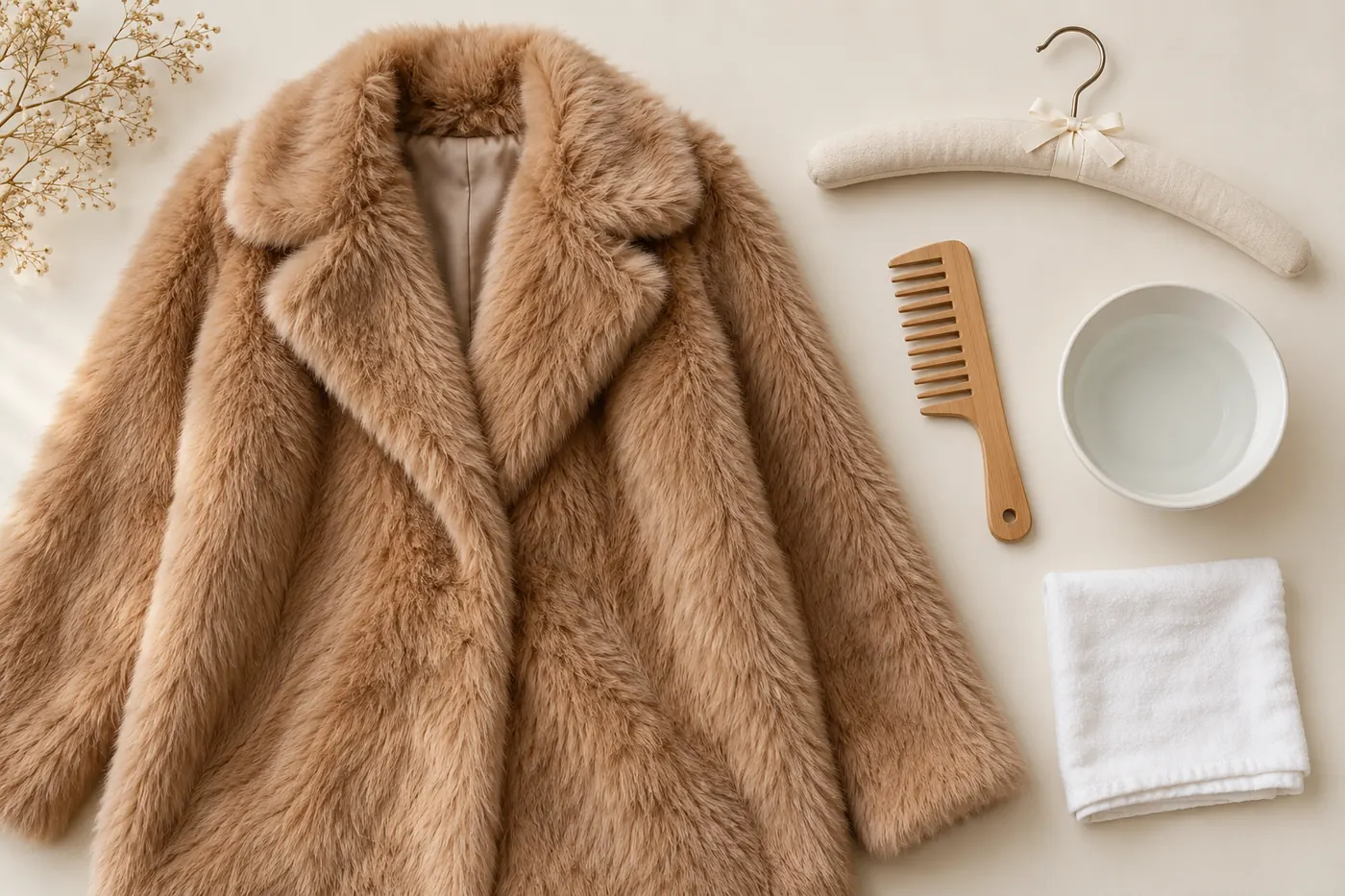
Many synthetic faux fur fibers can be damaged by heat. The label on the coat should guide every cleaning decision because the fiber blend and construction vary from one garment to another. In the United States, garments covered by the Federal Trade Commission's Care Labeling Rule must carry regular care instructions and warnings when a method could harm them.
Read those instructions before buying. Professional cleaning adds an ongoing cost. Home care may take time and still require a gentle method. Storage asks for room as well. A padded hanger supports the shoulders, and the pile keeps its shape better when it is not crushed between other coats.
Our guide to faux fur coat lifespan and care explains how friction, storage, cleaning and heat affect wear over time.
The last look before checkout
By this point, the product page should have answered most of your questions. Give it one final pass and make sure you can find these details.
- Photographs that show the back and inside of the coat, plus a useful close-up
- Measurements with an explanation of how they were taken
- Material information for the faux fur and lining
- Care instructions and clear return terms
Save a screenshot of the size chart when you order. Product pages sometimes change, and the screenshot gives you a clean reference if you need to ask customer service about sizing or a return.
Price alone cannot tell you whether a faux fur coat was made well. Look at the pile and the way the panels meet. Check the lining, then ask whether the coat fits the clothes and routines you already have. A good choice should still feel right after the studio photograph has done its job.
Browse Stanetco faux fur
Compare our long coats and shorter jackets when you are ready to choose a silhouette.
View long coats View short jacketsEditorial note Stanetco sells faux fur outerwear. This guide provides general shopping information. Always review the product description, garment label and retailer policies for the specific item you are considering.
Sources Federal Trade Commission guidance on garment care labeling and Stanetco guide to faux fur materials and construction.