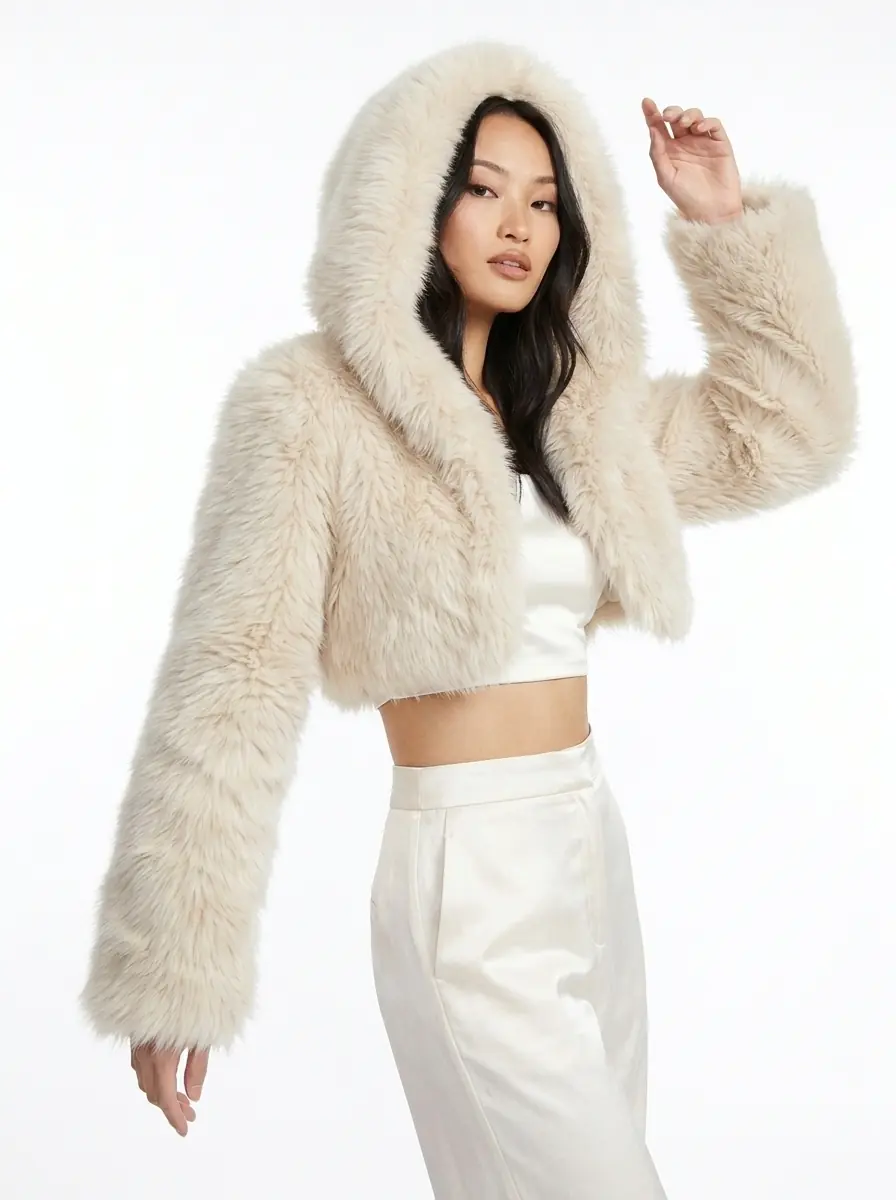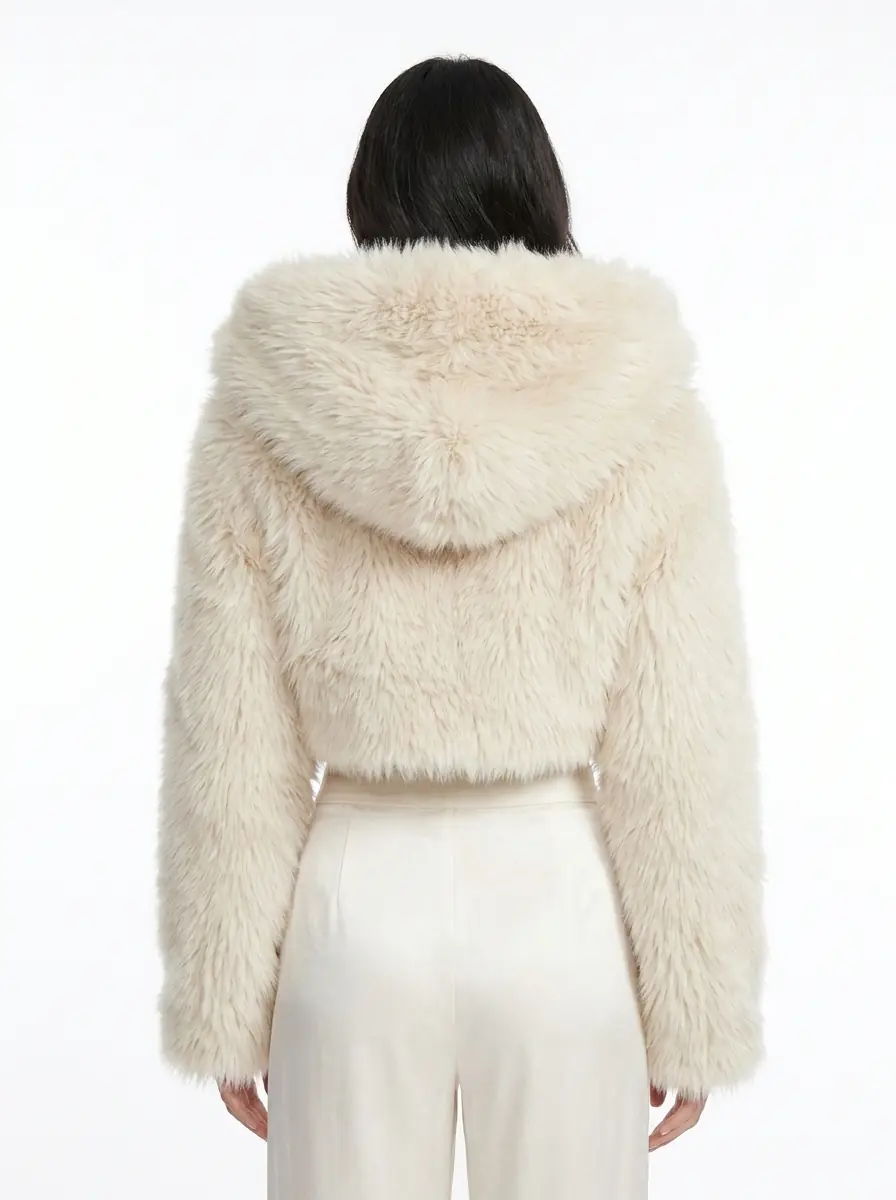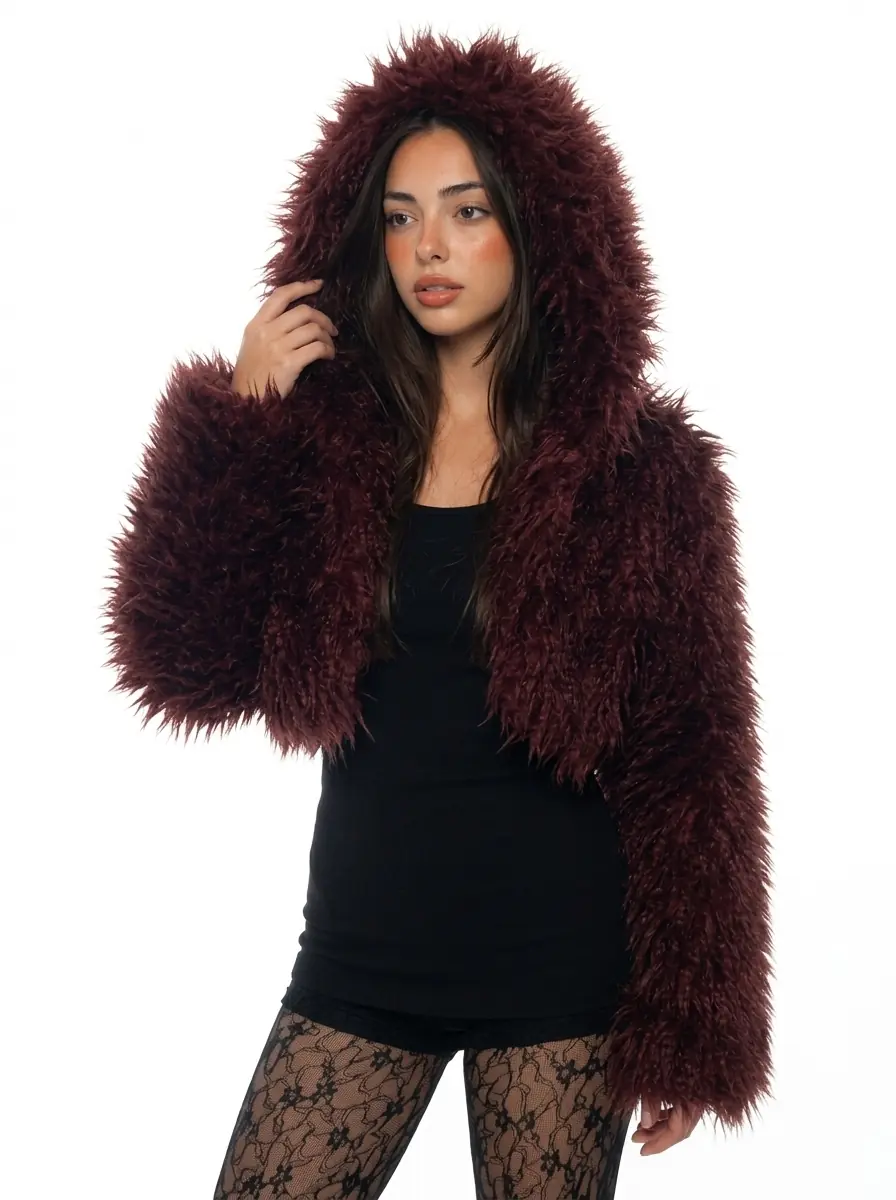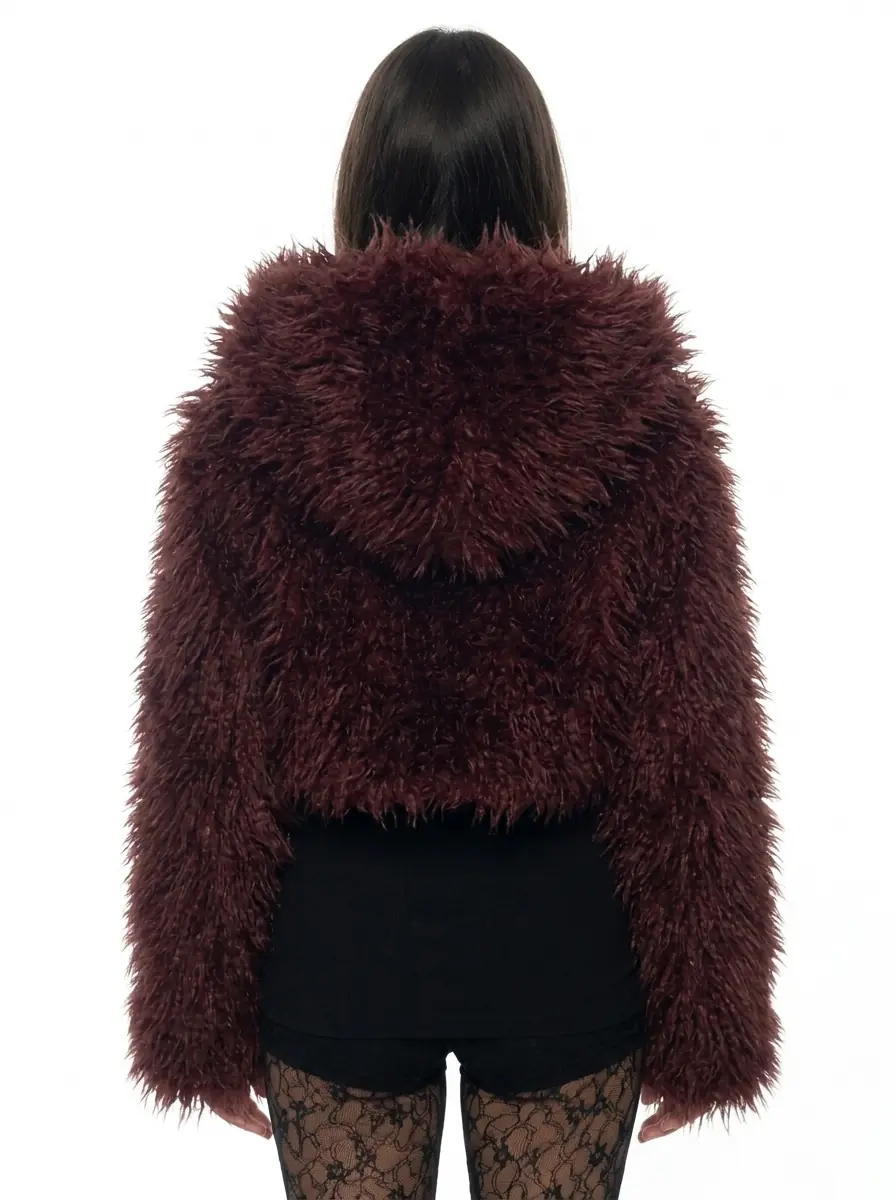
A hooded faux fur jacket should look good in photos, but the details you barely notice online—hood depth, lining, closures, length, and room for layers—usually determine whether you will actually wear it.
This guide draws on garment-development considerations and publicly available care-label guidance. Product construction and care instructions vary, so confirm the current product page and the label attached to your jacket before buying, cleaning, or drying it.
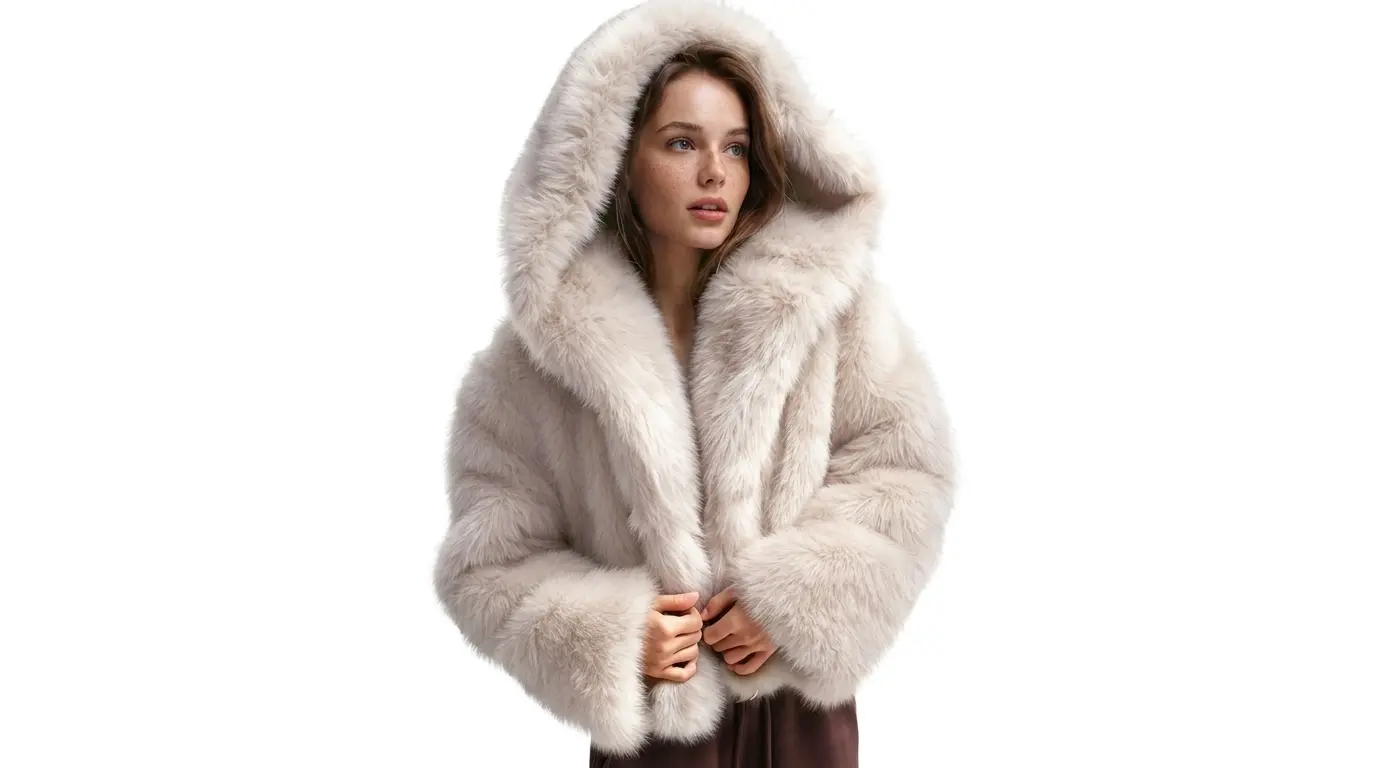
Quick answer: Choose a hooded faux fur jacket by checking how the hood sits when you turn your head, how the jacket fits over your usual winter layers, whether the lining and closures feel practical, and whether the care instructions suit your routine. Do not assume that a plush surface means the jacket is waterproof, windproof, or designed for a specific temperature.
Start by Identifying the Type of Jacket
Search results for a hooded faux fur jacket often mix two different kinds of outerwear. One is covered in faux fur across most or all of the exterior. The other is a conventional puffer, parka, or fabric coat with faux fur used only around the hood, collar, or front opening.
They serve different purposes. A full faux fur jacket puts texture and shape at the center of the outfit. A fur-trimmed parka behaves more like functional outerwear, with the trim adding a winter detail rather than defining the whole garment.
If you are still comparing fabrics, silhouettes, and construction, start with our guide to what a faux fur coat is and how to choose one .
Check the Hood Before Anything Else
Hood Depth and Side Vision
Hood depth is easy to miss when you shop online. A shallow hood may slide backward as you walk and offer little coverage in wind. A very deep hood can feel cozy and look dramatic from the front, yet block peripheral vision once you are moving outside.
Do not rely on a single front-facing model photo. Side views, images with the model looking down, and photos of the jacket worn open give you a better sense of how the hood falls across the shoulders and neck. If reviews mention that the hood repeatedly slips back or falls over the eyes, treat that as a fit issue rather than a minor styling detail.
Lining and the Hood-to-Body Seam
A smooth hood lining can reduce friction against hair, knit hats, and scarves. Also inspect the point where the hood joins the jacket. This seam takes repeated tension when you lift the hood, turn your head, or carry the garment by the neckline.
Close-up product images should show even stitching without puckering or exposed gaps. Customer photos and reviews can be useful when the listing does not clearly show the inside construction.
Fixed or Detachable Hood
A detachable hood gives one jacket more styling options and may feel less bulky indoors. A fixed hood usually creates a cleaner line across the shoulders and avoids the small gaps caused by a zipper or buttons.
The better choice depends on how you expect to wear the jacket. If you often move between cold streets and restaurants, offices, or events, a detachable hood may be convenient. If the hood is central to the look and you want the most continuous silhouette, a fixed design may make more sense.
Let Jacket Length Guide the Outfit
Cropped, hip-length, and long hooded faux fur jackets may look similar in product photos, but they behave differently in daily wear. A cropped jacket feels lighter and works naturally with high-rise bottoms. A longer coat provides more body coverage, though weight, movement, and comfort while sitting matter more as the hem gets longer.

| Length | Works Well With | Check Before Ordering |
|---|---|---|
| Cropped | High-waisted jeans, tailored pants, fitted dresses, and evening outfits | Where the hem sits when you sit down and whether your base layer extends below it |
| Hip length | Everyday outfits, longer knits, straight-leg pants, and moderate coverage | Whether the hem bunches over full skirts or wide-leg pants |
| Long | Dresses, commuting outfits, and looks that need more body coverage | Overall weight, walking ease, vehicle entry, and comfort while seated |
If you want a fashion-forward layer that does not hide most of the outfit, a cropped hooded faux fur jacket is usually the most flexible option. The shorter proportion works especially well with denim, skirts, and dresses that define the waist.
Leave Room for the Layers You Actually Wear
Faux fur has physical and visual volume. That does not mean you should automatically order a larger size. Instead, measure a winter jacket that already fits the way you like, then compare those measurements with the brand's size chart.
Four Measurements to Compare
- Bust: Allow space for your usual knit or lightweight hoodie. The front should close without pulling horizontally.
- Shoulder width: Shoulders that are too narrow can restrict arm movement; excessively wide shoulders may make a cropped jacket look slouchier than intended.
- Sleeve length: Check where the cuff lands when you bend your arms, carry a bag, or wear gloves.
- Center-back length: This measurement helps you judge where the hem will sit with high-rise pants and how the jacket will feel while driving or sitting.
If you fall between sizes, read both the size chart and the listing's fit description. Choose based on whether you want a closer, cleaner silhouette or enough space for thicker knitwear. Plush fabric alone is not a reason to size up.
Look Beyond the Softness of the Pile
Softness matters, but it does not tell you whether a jacket will be comfortable or practical after repeated wear. Look for construction details that are easier to overlook in a product thumbnail.
- Lining: A smooth lining helps the jacket slide over sweaters, dresses, and shirts without catching.
- Front closure: Zippers, buttons, hooks, and snaps affect how quickly the jacket closes and how much of the front remains exposed.
- Pockets: Check their position and depth if you regularly carry a phone, keys, or gloves.
- Seams: Pay close attention to the shoulders, underarms, hood attachment, pocket openings, and closure points.
- Pile recovery: In close-up photos, look for an even surface that does not appear permanently crushed or widely separated at the base.
For more detail on wear, storage, and the parts of a coat that tend to age first, read how long a faux fur coat can last .
Soft and Plush Does Not Automatically Mean Weatherproof
A hood and a thick-looking pile can increase coverage, but they do not prove that a jacket is waterproof, windproof, or suitable for a specific temperature. If the product page does not make a supported performance claim, do not assume one.
For wet weather, check whether the manufacturer identifies a water-resistant treatment and whether the care label addresses moisture. In windy conditions, the front closure, cuffs, hem, and fit around the neck all affect comfort. In very cold weather, the jacket is only one part of the system; base layers, knitwear, scarves, gloves, and footwear matter too.
Persistent rain and heavy wet snow can saturate a non-weatherproof garment. If faux fur becomes wet, avoid wringing, rubbing, ironing, or using high heat. Support the garment, let it dry according to its label, and do not store it until it is completely dry.
Choose a Color You Can Wear Repeatedly
Cream and off-white hooded faux fur jackets look soft and clean with blue denim, gray knitwear, black trousers, and beige skirts. Light pile also shows makeup, food marks, and dark lint more easily, so it may require more careful handling around the face and at meals.

Burgundy brings more color and a slightly vintage, holiday-ready mood. It works naturally with black, dark denim, chocolate brown, and other restrained neutrals. Charcoal, black, and mixed brown tones are easier to wear often if you prefer a darker palette.
A useful test is to name at least three items already in your closet that work with the jacket. If that is difficult, the color may be more of an occasional statement than an everyday choice.
For outfit combinations by length and color, continue with our winter faux fur coat styling guide .
Read the Care Requirements Before You Buy
In the United States, the Federal Trade Commission's Care Labeling Rule requires manufacturers and importers of covered textile apparel to provide instructions for regular care. For shoppers, the attached label is the best starting point for deciding whether a garment fits their cleaning routine.
There is no single cleaning method that is safe for every faux fur jacket. The pile fiber, backing, lining, dye, trims, and construction can all change what the garment can tolerate. Before ordering, check whether the item calls for professional cleaning, permits a gentle wash, prohibits tumble drying, or includes a specific warning about heat.
After cleaning, allow the jacket to dry fully according to its label before gently arranging the pile. For storage, give the garment enough room to hang without long-term compression, which can flatten the surface.
Hooded Faux Fur Jacket Buying Checklist
- The hood does not block your side vision or pull sharply when you turn your head.
- You compared the bust, shoulder, sleeve, and center-back measurements with a jacket you already wear.
- The closure suits how and where you plan to use the jacket.
- The pockets are positioned well and deep enough for the items you carry.
- The color works with at least three pieces already in your wardrobe.
- The care method fits your routine and you have enough storage space to avoid crushing the pile.
- You did not assume weather performance that the product page does not state.
Frequently Asked Questions
Is a Hooded Faux Fur Jacket Waterproof?
Not necessarily. A hood and a plush surface add coverage but do not establish waterproofing. Look for a clear water-resistant or waterproof claim and follow the care label after exposure to moisture.
Should I Size Up in a Hooded Faux Fur Jacket?
Do not size up automatically. Measure the layers and jacket you normally wear, then compare those numbers with the brand's chart. Leave more room if you plan to wear thick sweaters, but avoid excess volume if you want a neat cropped shape.
Is a Cropped Hooded Faux Fur Jacket Practical?
It can be practical for everyday styling, commuting, dinners, and occasions where the jacket is a statement layer. It works especially well with high-waisted bottoms. For long periods outdoors or very cold conditions, evaluate the entire layering system and the amount of coverage you need.
Can You Machine-Wash a Faux Fur Jacket?
It depends on the individual garment. Different pile fibers, backings, linings, dyes, and trims require different care. Follow the product instructions and the attached care label rather than a general washing method.
Explore a Hooded Faux Fur Style
Stanetco currently lists a cropped burgundy hooded faux fur jacket. Check the live product page for current sizing, care information, price, and availability before ordering.
Source and Editorial Reference
The FTC source supports the care-label requirement described above. Fit, styling, and construction guidance is editorial advice and should be checked against the specifications of the individual garment.