
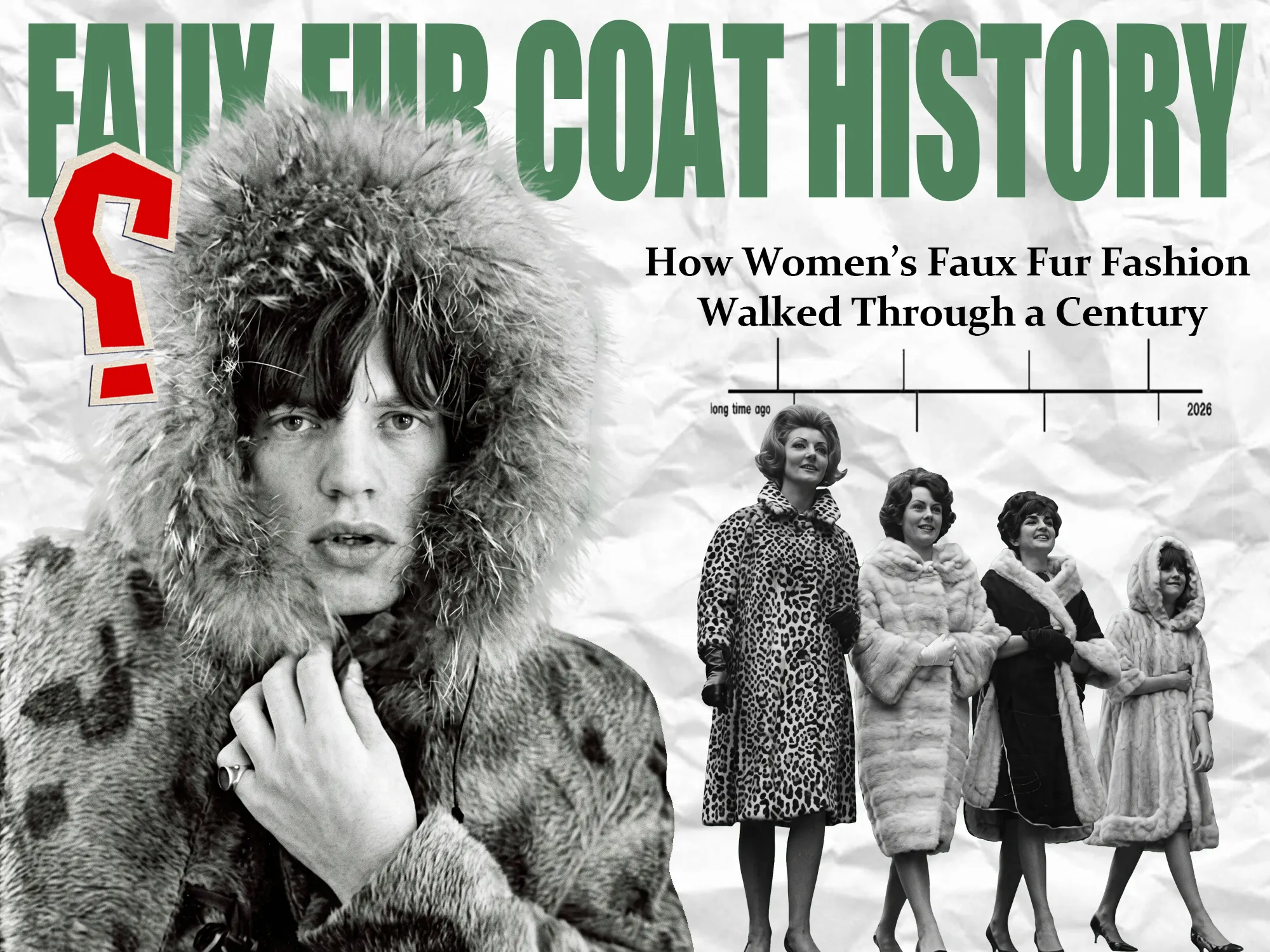
When you see someone in a faux fur coat on a winter street, it is easy to think of an old film: a heroine, newly separated from her partner, walking alone in a fur coat. The wide collar, rich brown color, and glossy long pile carry an unmistakable sense of romance. Today, women’s faux fur coats are everywhere on American streets. They may appear as cropped jackets with jeans, long coats that reach the calf, or vests made for fall layering.
This change did not come from a single fashion trend. Materials, social attitudes, and women’s lifestyles kept changing, and faux fur gradually developed from an alternative to real fur into an independent fashion choice.
Faux Fur Began as a Practical Alternative
Before the 20th century, real fur had long been associated with wealth and status. At the same time, textile mills were already using wool, mohair, and silk to make fur-like fabrics. Samples from the late 19th century in the collection of the Smithsonian’s National Museum of American History show that people were trying to reproduce the appearance of beaver, seal, and other furs quite early. Early products offered limited color and texture, but they were more affordable for ordinary consumers.
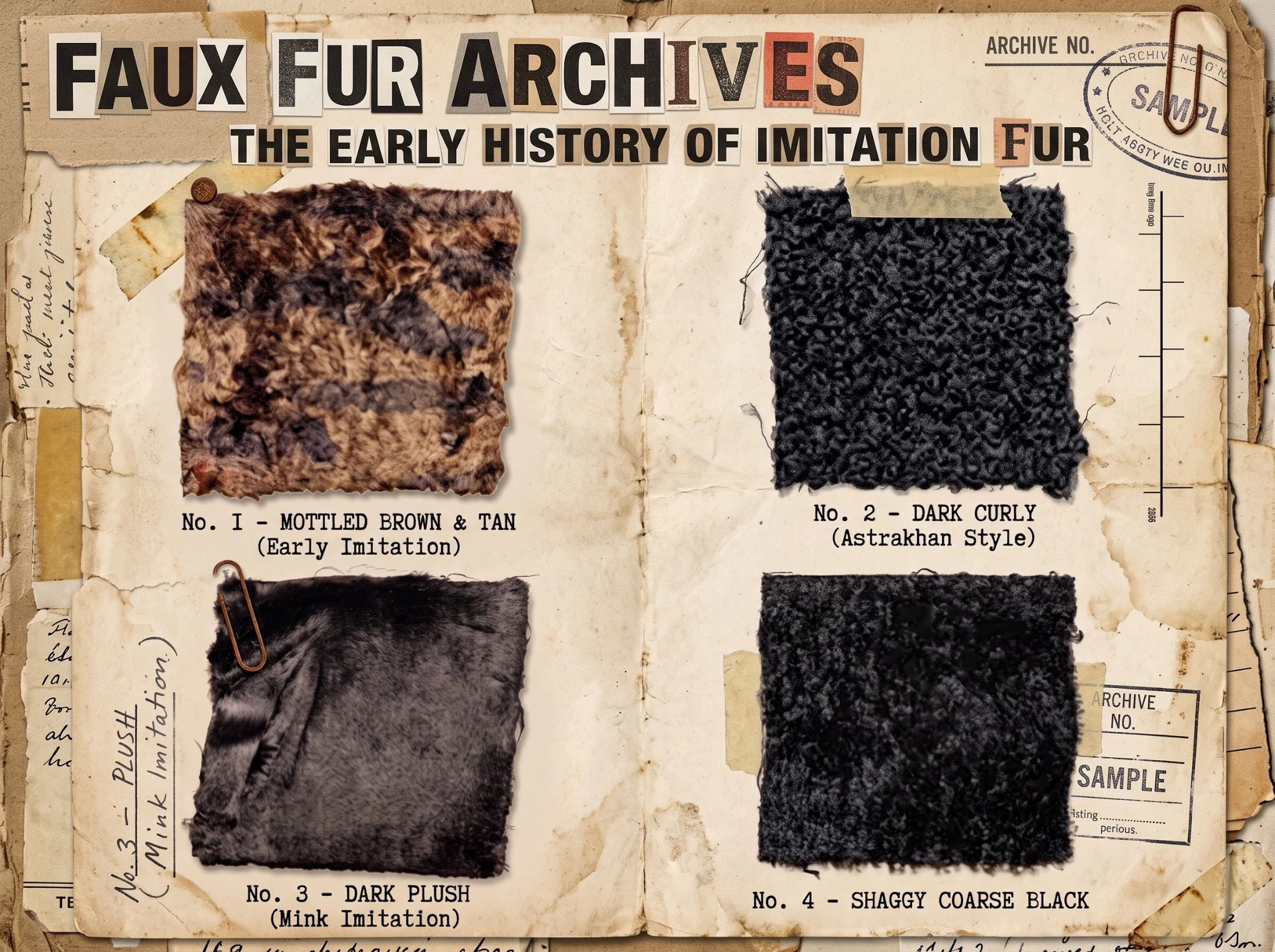
After World War II, the rapid development of synthetic fibers quickly changed the market. By the 1950s, materials such as acrylic made imitation pile lighter, easier to dye, and better suited to mass production. Black, brown, cream, and gray faux fur coats began to enter department stores and everyday wardrobes. Designs of the period still aimed to look like real fur, and today’s faux mink coats retain some of that classic visual language.
How It Changed from a Substitute into a Fashion Statement
Once warmth and appearance were no longer the main challenges, designers began to treat faux fur as a creative material. The 1960s and 1970s brought brighter colors, longer pile, and more exaggerated silhouettes. Faux fur no longer had to copy a particular animal exactly; pink, red, and animal prints could also express personality.
By the 1980s, broad shoulders and longer hemlines gave long faux fur coats a stronger presence. In the 1990s, animal-welfare concerns received more attention, and some consumers began to choose coats made without animal fur. The meaning of faux fur shifted with them: it was no longer simply a lower-priced alternative to animal-fur outerwear for winter, but a clothing choice that could reflect a personal position.
Why Long Coats, Cropped Jackets, and Vests Keep Returning
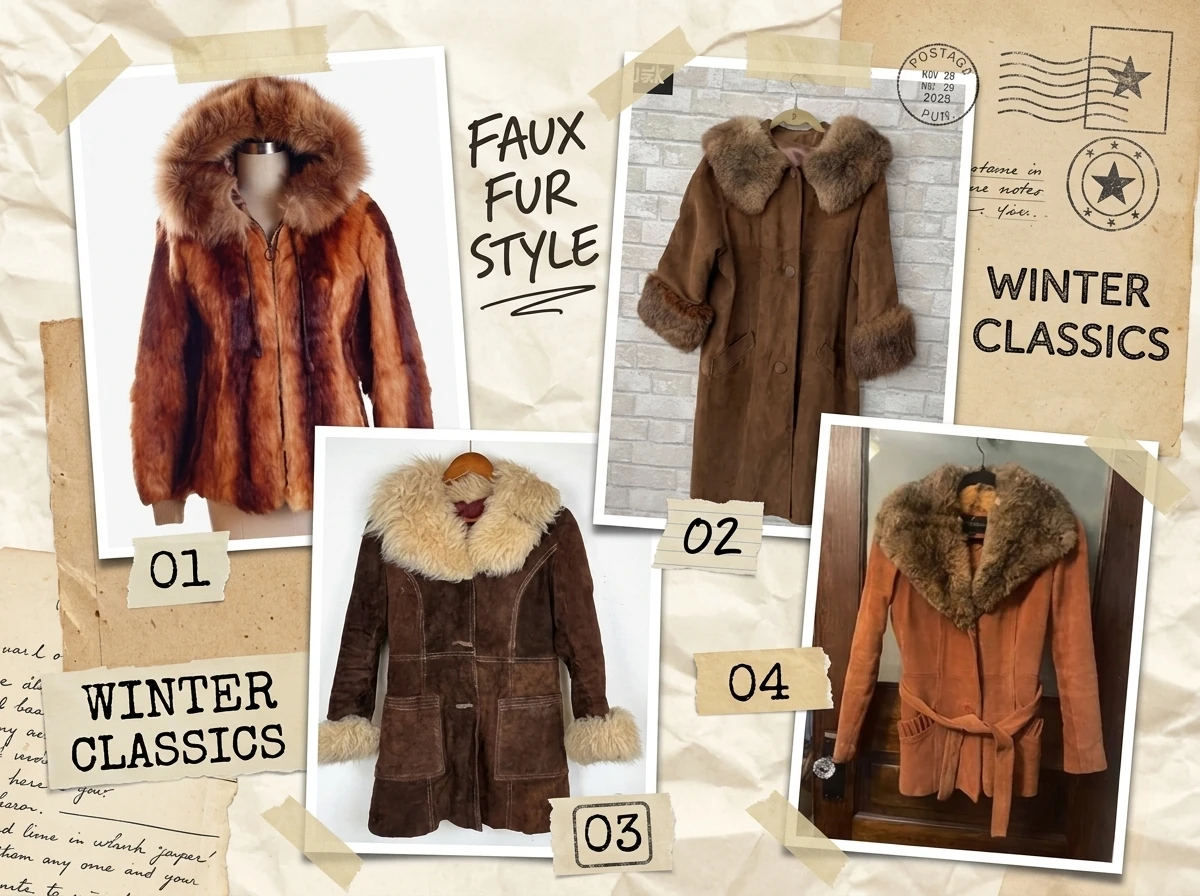
Women’s faux fur outerwear does not have one fixed shape. A long faux fur coat preserves a classic, noticeable silhouette and works with dresses, tall boots, and simple knit sets. Black long coats often feel more formal, while brown styles can create an easier vintage mood.
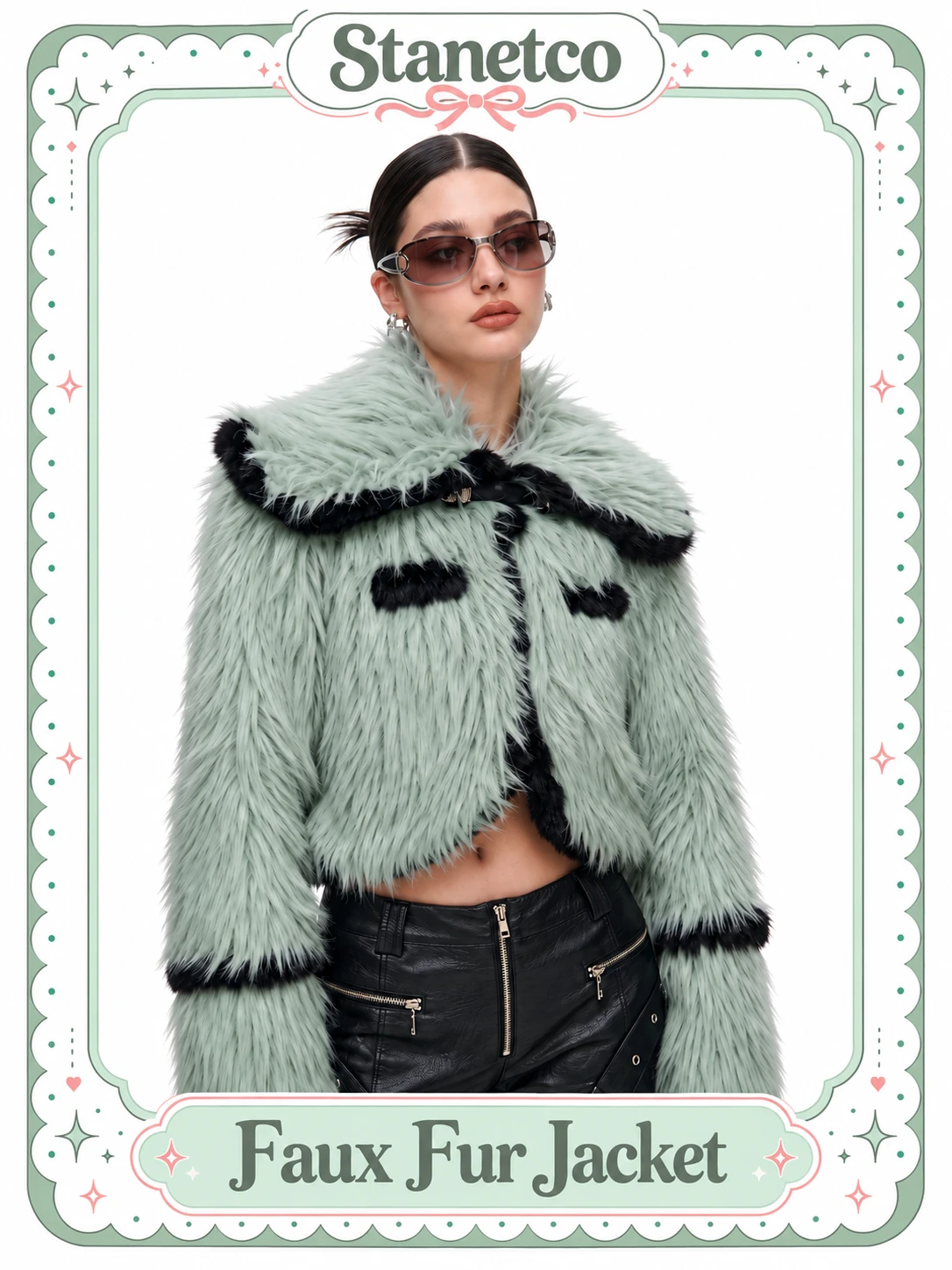
A cropped faux fur jacket is closer to everyday life. The shorter hem makes driving and commuting easier, and it can be worn with high-waisted jeans, straight-leg pants, or a skirt. Dropped shoulders and wide lapels can preserve the plush effect while reducing the visual weight of the whole garment.
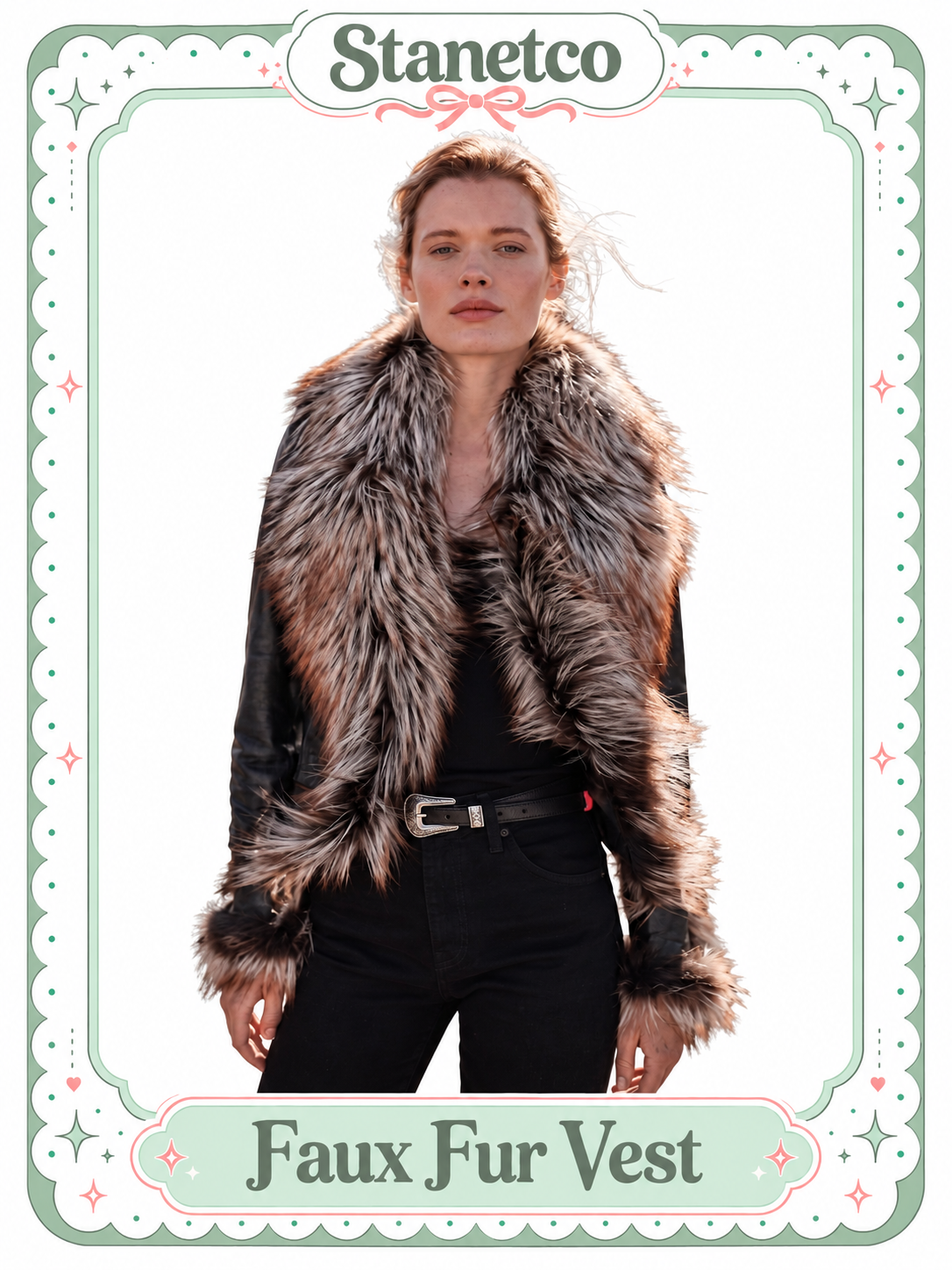
A faux fur vest suits fall weather before temperatures fall sharply. It can be layered over a sweater, shirt, or lightweight dress to add texture to a simple outfit. Styles return as trends cycle, but the way they are worn changes: today’s faux fur is more often paired with wardrobe basics and placed in everyday settings.
What to Look for When Choosing Faux Fur
Appearance is only the first step. When choosing a women’s faux fur coat or jacket, first brush the pile gently against its direction and see whether it springs back naturally. Then check whether the seams and collar shed easily. The lining should lie flat, without obvious pulling or loose threads. Thicker fabric needs enough room through the shoulders and arms; otherwise, sitting down or driving may feel uncomfortable.
Color also affects how often a piece will be worn. Black and dark brown are easy to coordinate and suit long-term use. White, cream, and bright colors make a stronger statement, but usually require more careful cleaning. Before buying, considering your existing wardrobe, local winter temperatures, and real wearing occasions is more reliable than judging from a single model photograph.
Animal welfare is one reason many people choose faux fur, but avoiding animal fur does not mean a garment has no environmental impact. Conventional faux fur is usually made from synthetic fibers. Instead of simply labeling one material “eco-friendly,” it is more useful to consider whether the fabric is durable, whether it sheds easily, and whether you can keep wearing the coat for several winters.
The Next Step for Faux Fur Is Better Material and Longer Use
Future faux fur will still include the familiar long coat, cropped jacket, and vest, but consumers will pay more attention to weight, hand feel, fiber source, and durability. Some fabrics are beginning to use recycled fibers or reduce conventional petroleum-based materials, although quality and real environmental performance still vary from one product to another.
Looking back over the past century, faux fur began by imitating real fur and later developed its own colors, proportions, and style language. It has remained in women’s wardrobes because it keeps adapting to the way people live. A coat with a suitable fit, dependable construction, and enough appeal to be worn repeatedly usually offers more value than briefly following a single trend.
Sources


